-
2026.03.13 – 2026.05.7
Ti Hu: Qinghai–Tibet Reception Hall, 358 South Xizang Road, Huangpu District, ShanghaiTi Hu: Qinghai–Tibet Reception Hall was established by Tibet Tihu Cultural Tourism through the adaptive reuse of the former residence of Zhang Taiyan and Tang Guoli, a historic building in Shanghai’s Huangpu District. Inspired by the building’s historical legacy of ethnic and cultural exchange, it has been designated by the Tibet Autonomous Region Department of Culture and Tourism as Tibet Cultural Window · Shanghai. As Shanghai’s first contemporary platform dedicated to Qinghai–Tibet culture, the venue is committed to the long-term presentation of contemporary artistic practices inspired by the Qinghai–Tibet Plateau.
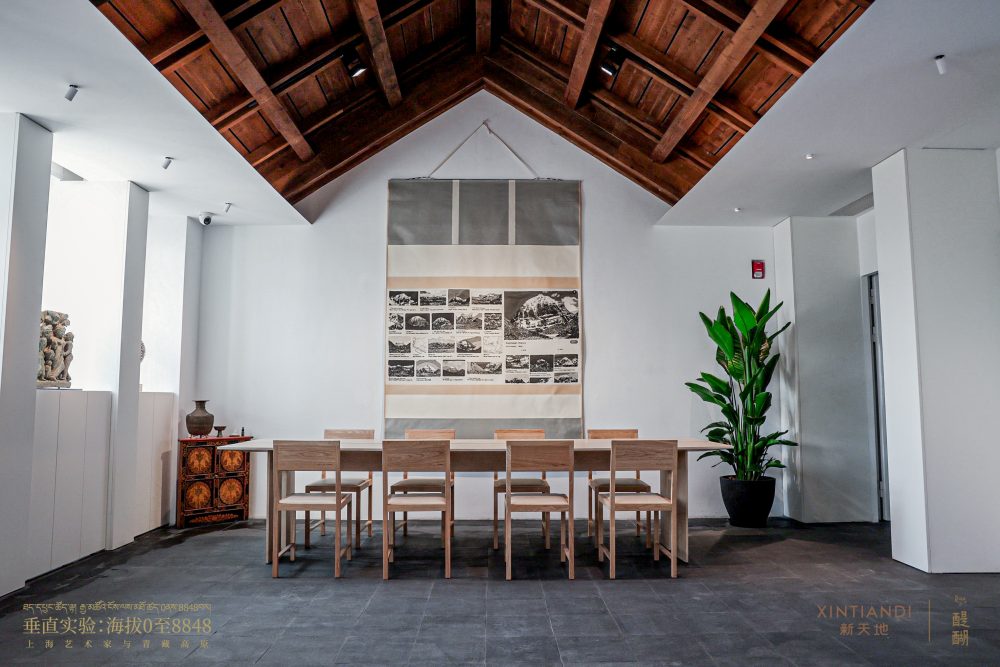
The exhibition presents, for the first time, a systematic overview of more than a century of artistic and cultural exchanges between Shanghai and the Qinghai–Tibet Plateau. It features works by thirteen contemporary Chinese artists either born in Shanghai or closely associated with the city, including Zhuang Xueben, Chen Yifei, Zhou Chunya, Ding Yi, and Xu Zhen. Through archival materials, artworks, and moving images, the exhibition constructs a dialogue that transcends time and space.
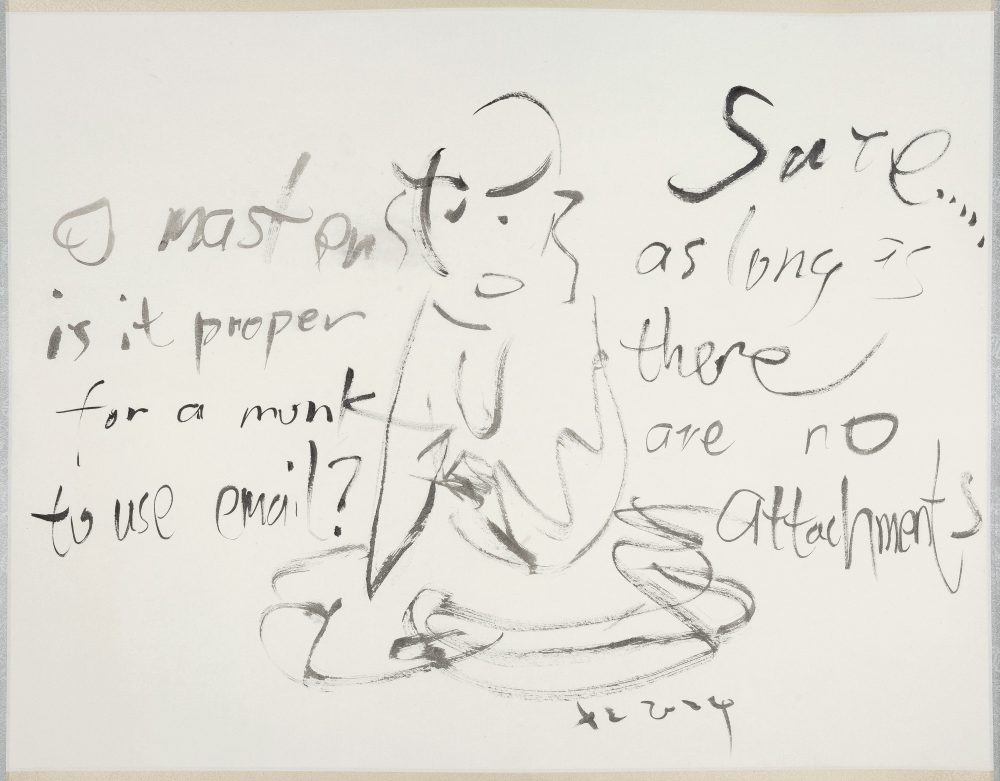
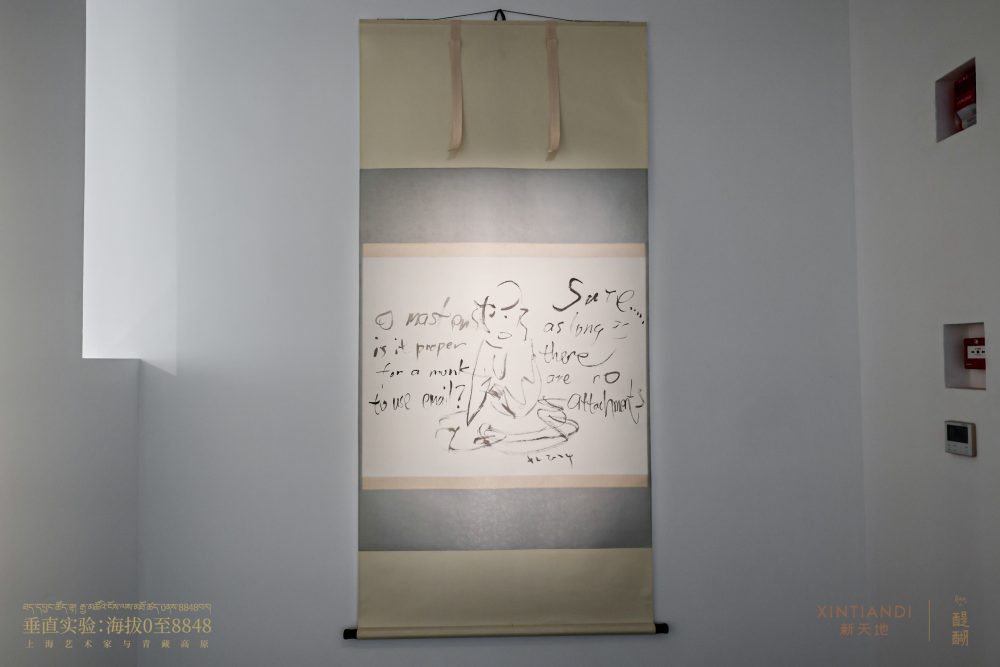
Xu Zhen’s Enlightenment series is a form of Zen painting rooted in Chan Buddhist traditions, characterized by a playful yet thought-provoking visual language. The artist selects cartoons related to Buddhism from global news media and reinterprets them in the style of traditional Zen painting. By combining the imagery of contemporary global media with centuries-old Chan painting traditions, the works create a compelling dialogue between the contemporary and the historical.
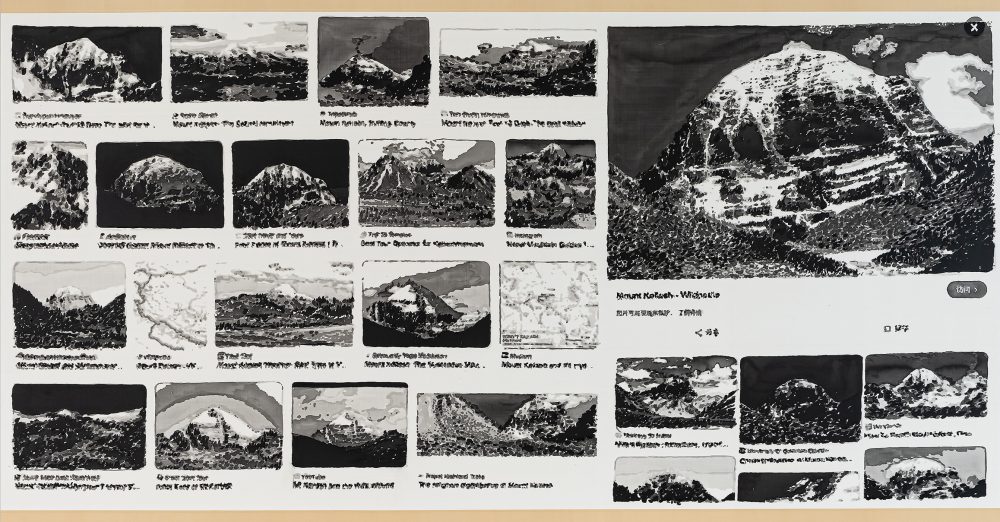
In this work, Xu Zhen depicts the interface of an online search page for Mount Kailash. The artist cleverly juxtaposes the mountain’s sacred significance with the utilitarian nature of a search engine interface. While this contrast suggests a tension between spirituality and technology, Xu unifies these seemingly contradictory elements through the subtle and refined visual language of traditional Chinese ink painting, allowing them to coexist harmoniously. The work reflects on contemporary forms of spiritual pursuit while examining the relationship between digital tools and the meanings they produce.
Artworks