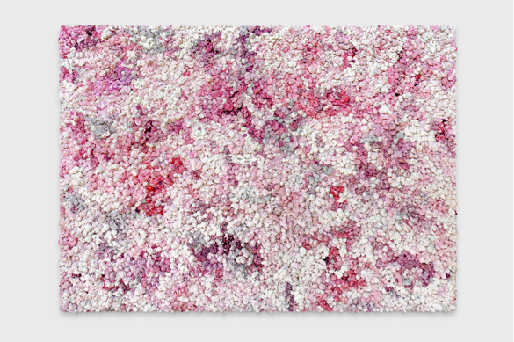
-
2026.4.28-2026.8.16
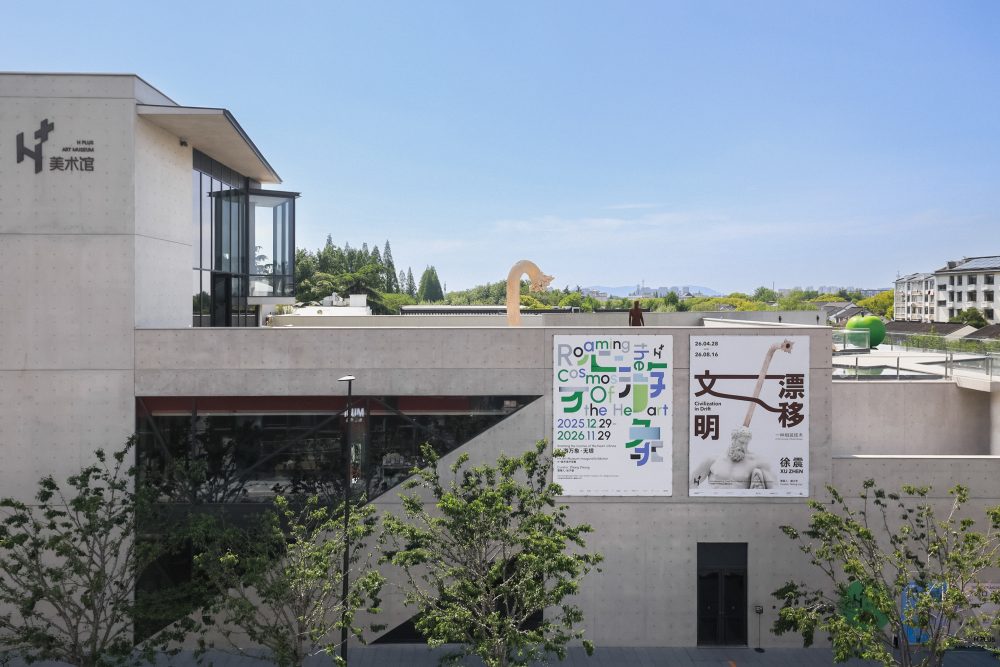
H+ Museum, SuzhouAscending the signature fair-faced concrete staircase by Tadao Ando, visitors first encounter the iconic green apple. Turning back, a five-metre coiling Corinthian column nods in greeting.
This is Xu Zhen’s “Hello.”
The classical column — one of the most stable structural symbols of Western civilisation — undergoes a fundamental shift here: it no longer bears order, but transforms into something almost biological. Theopening at the column is not decorative but an operational structure: simultaneously a physical point of passage and a turning point in the act of looking. The gaze is reorganised between entry and exit, becoming an interface through which meaning is continuously opened up — a device allowing relations to be generated perpetually.
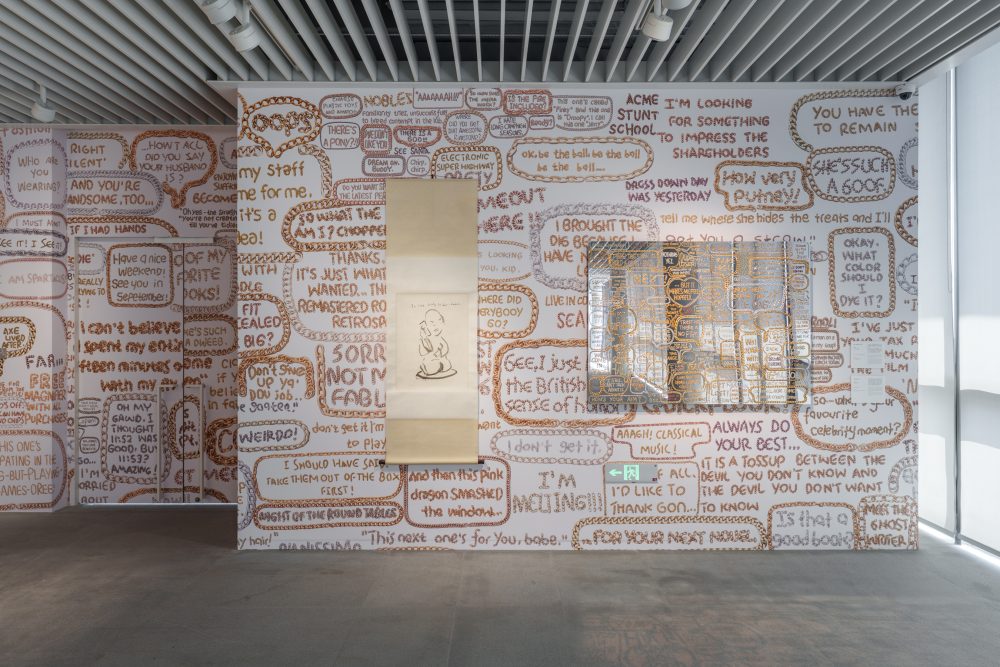
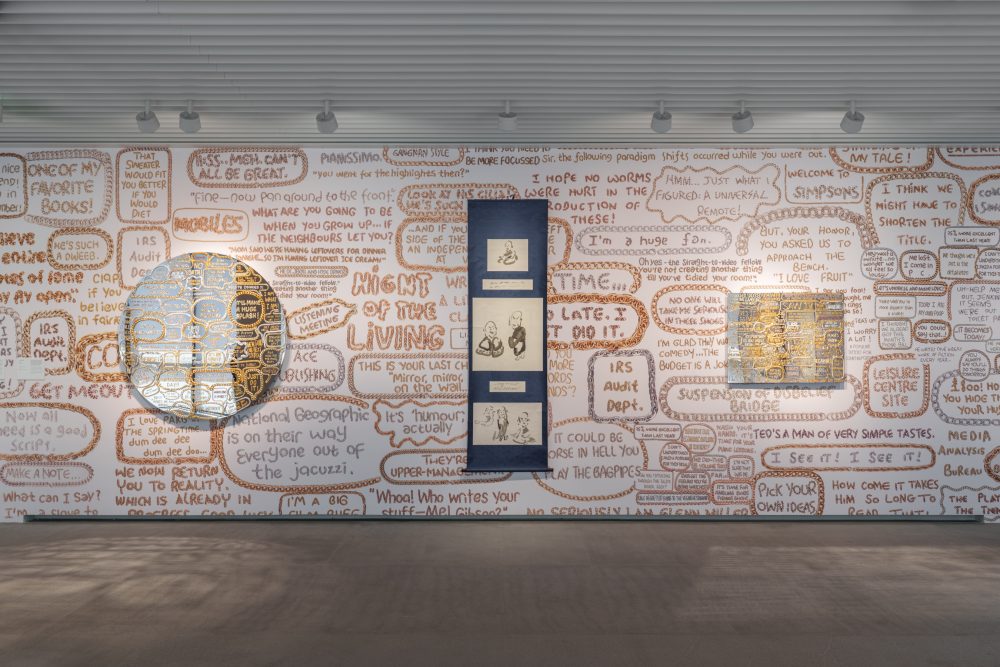
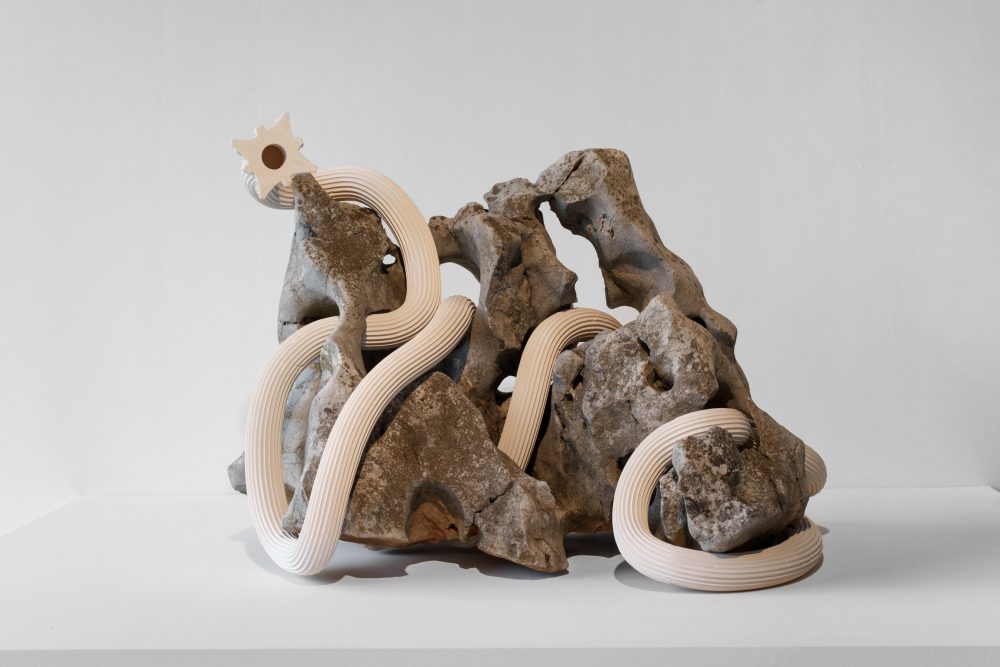
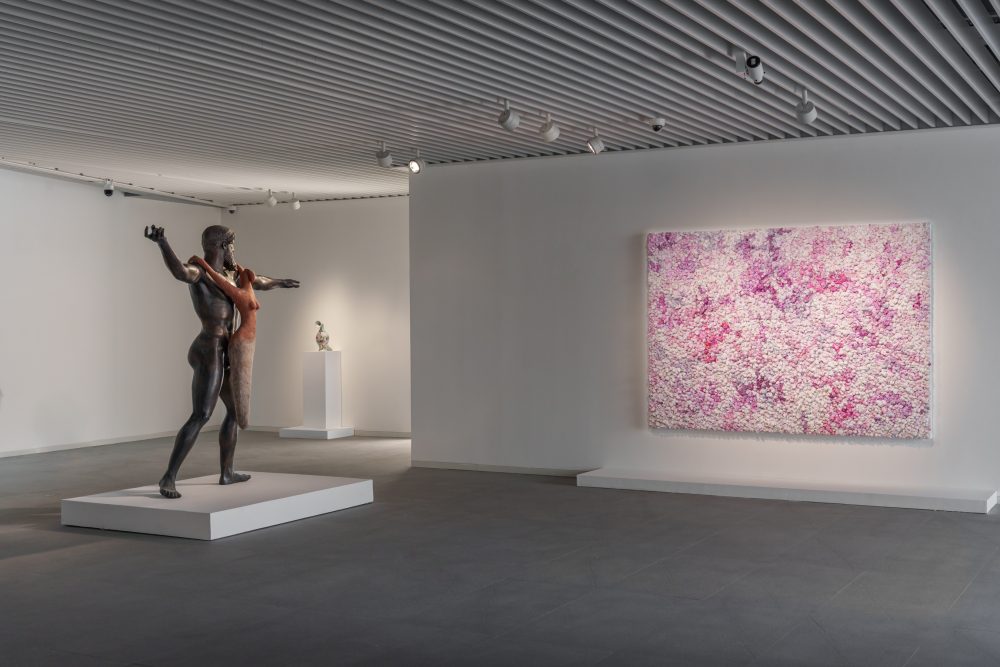
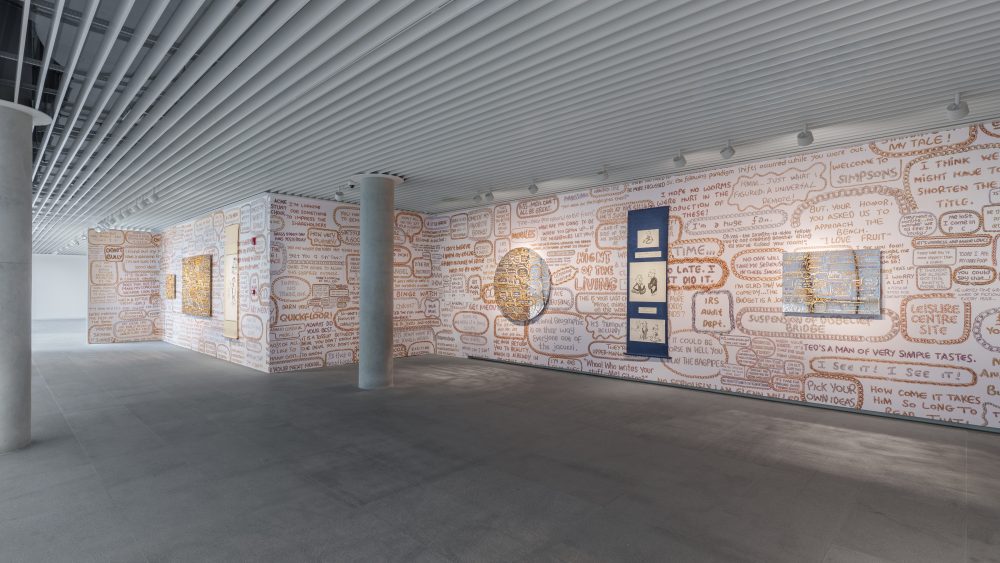
A more critical move follows: this is what Xu Zhen has fashioned as a “perforation of civilisation.” Within the scene of near-genesis created by the winding Corinthian column and the green apple, the artist invites visitors in Suzhou to step into the “Xu Zhen Garden” — a space where the artist examines civilisation and globalisation.
Over the past several decades, “globalisation” has become the default framework for understanding the contemporary world. This seemingly neutral term has always harboured a singular narrative: the expansion and interconnection of capital, trade, information, and institutions on a global scale. Xu Zhen’s practice enters precisely from this concealed point. What he addresses is not “globalisation” itself, but a far more complex proposition — the pluralisation of globalisation.
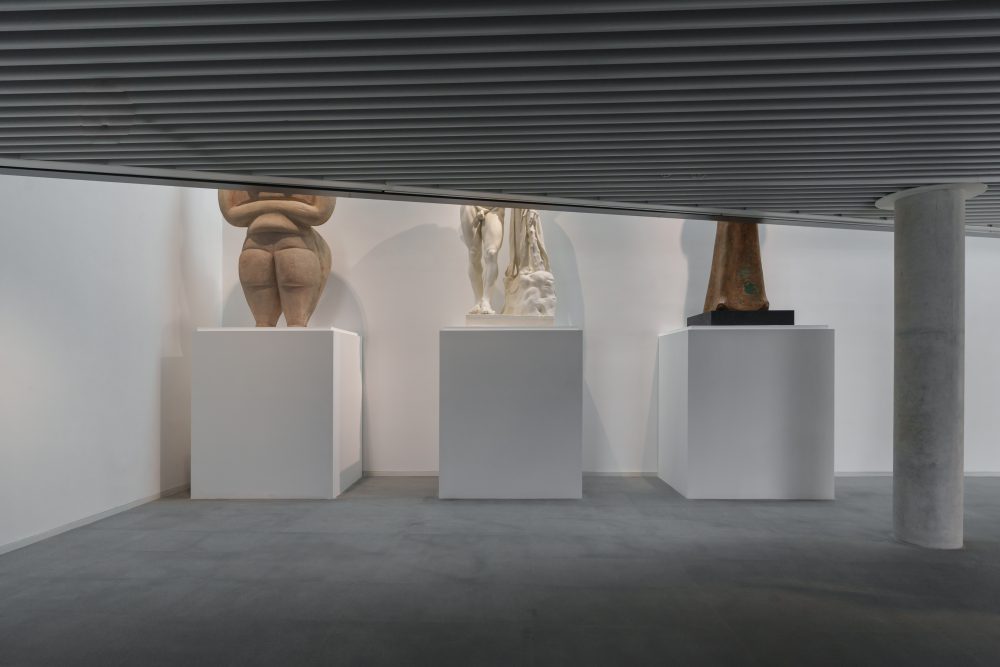
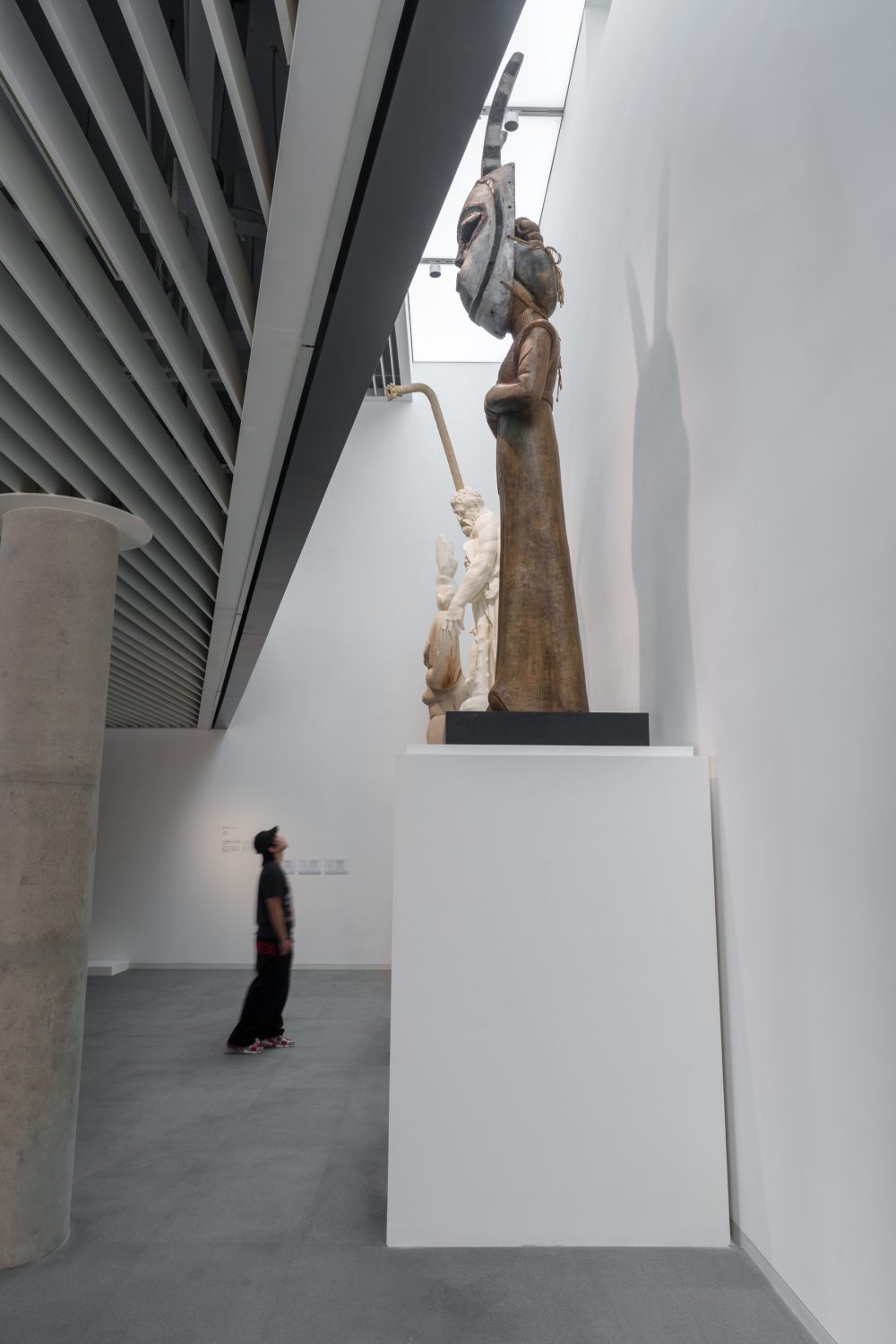
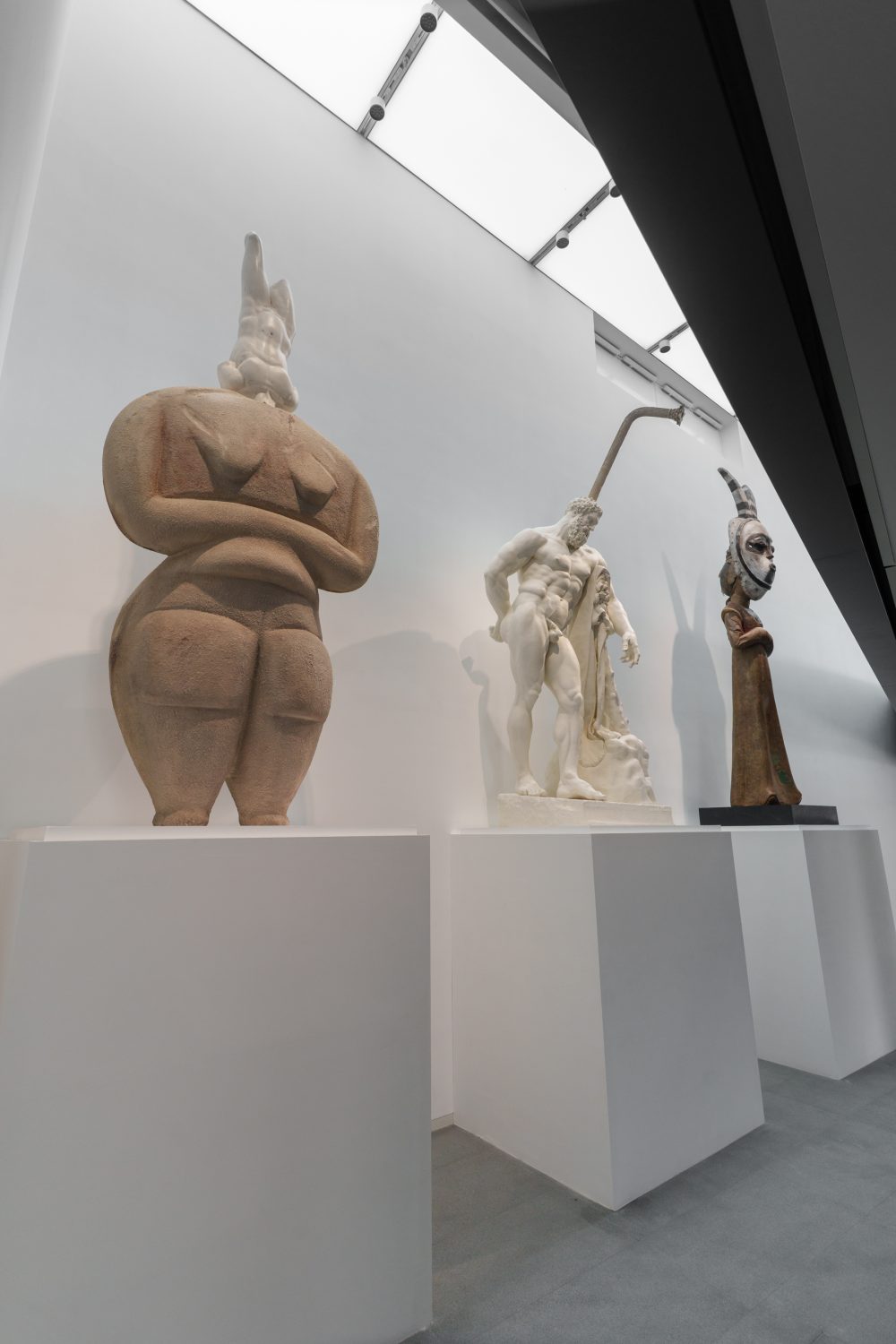
The dominant model of globalisation rested on a premise: that Western classic is the standard, and other cultures are resources, supplements, exotica. Art history, too, was understood on this premise as a totality with its own internal continuity. Yet in Xu Zhen’s work, we repeatedly encounter familiar visual sources — classical sculptures, religious
symbols, museum displays, industrial products — drawn from both East and West, precisely cut, spliced, and displaced to produce a destabilised visual experience: familiar, yet somehow wrong.
If this disorientation is exactly the artist’s intention, it is because he seeks to interrogate a long-dominant mode of looking — an interpretive framework centred on Western art history and grounded in linear development.
Xu Zhen’s question is: has globalisation solidified or loosened this structure? His answer: globalisation is not a unidirectional process radiating outward from a single centre, but a site where multiple civilisations, images, materials, and bodily experiences rewrite one another. And so he scrambles the order, stripping every sign of its natural centre.
The exhibition is therefore not a simple “comparison of civilisations,” nor an attempt to generate conflict through the juxtaposition of cultural symbols. It is an inquiry into how we might rethink the ways in which “the world” is perceived, organised, and seen.
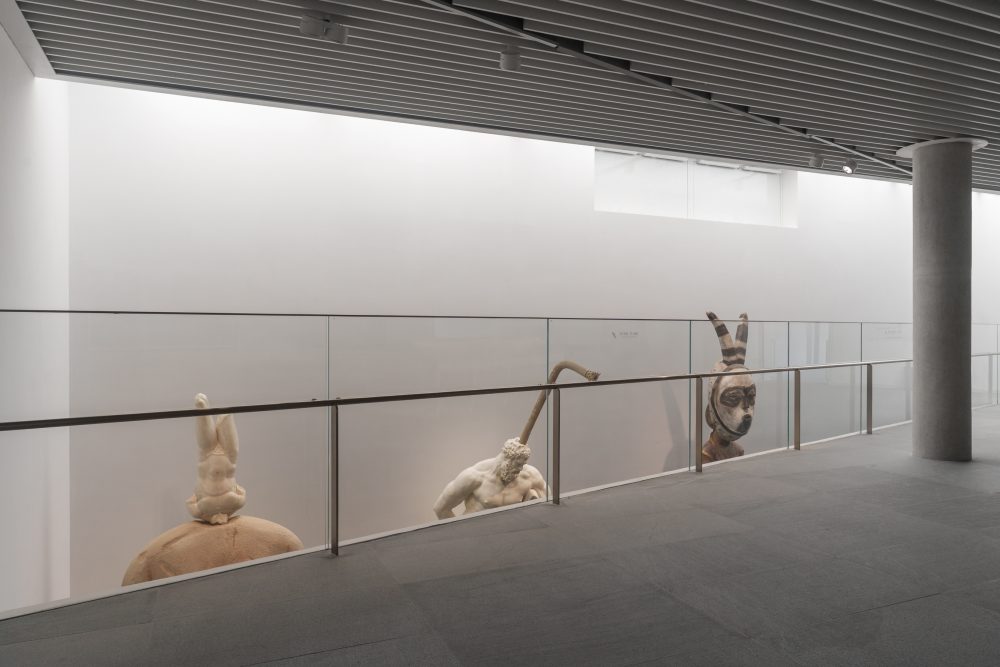
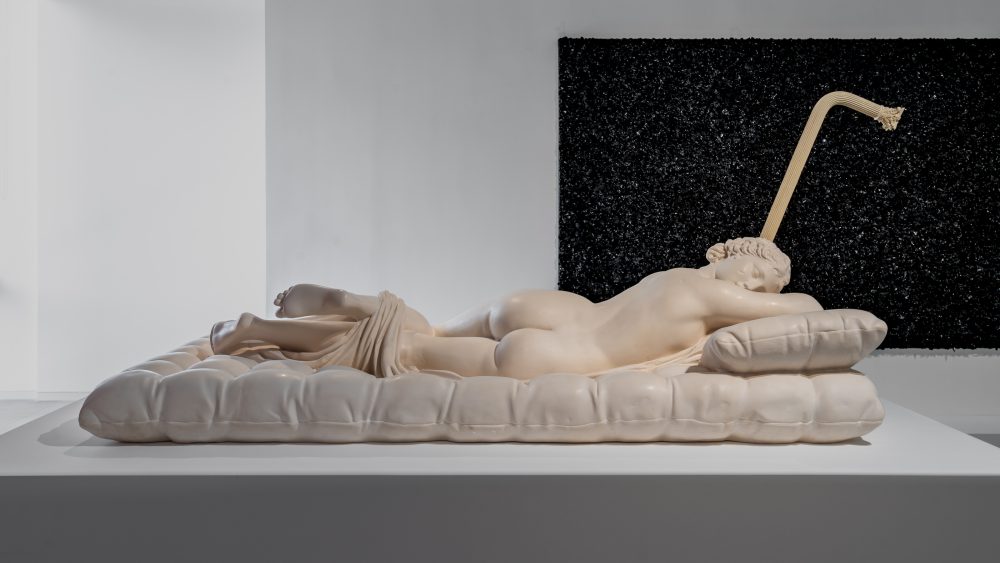
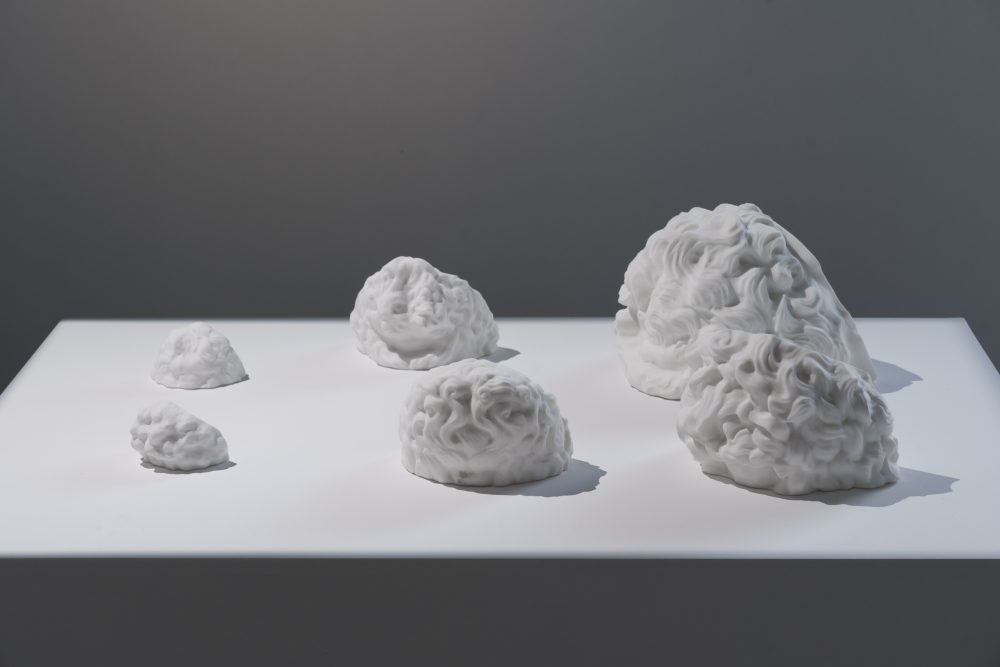
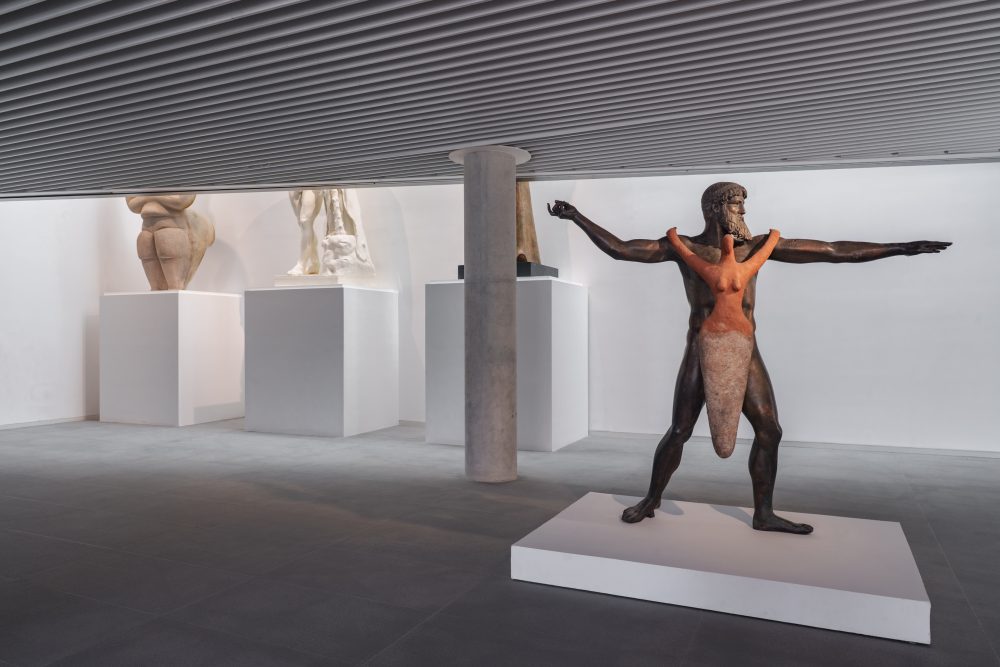
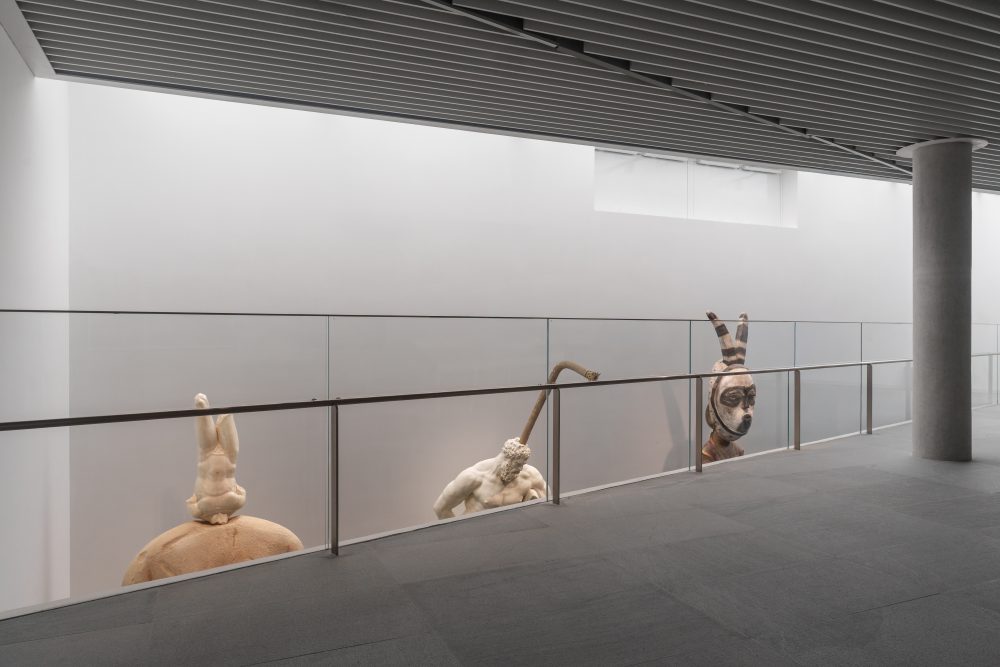
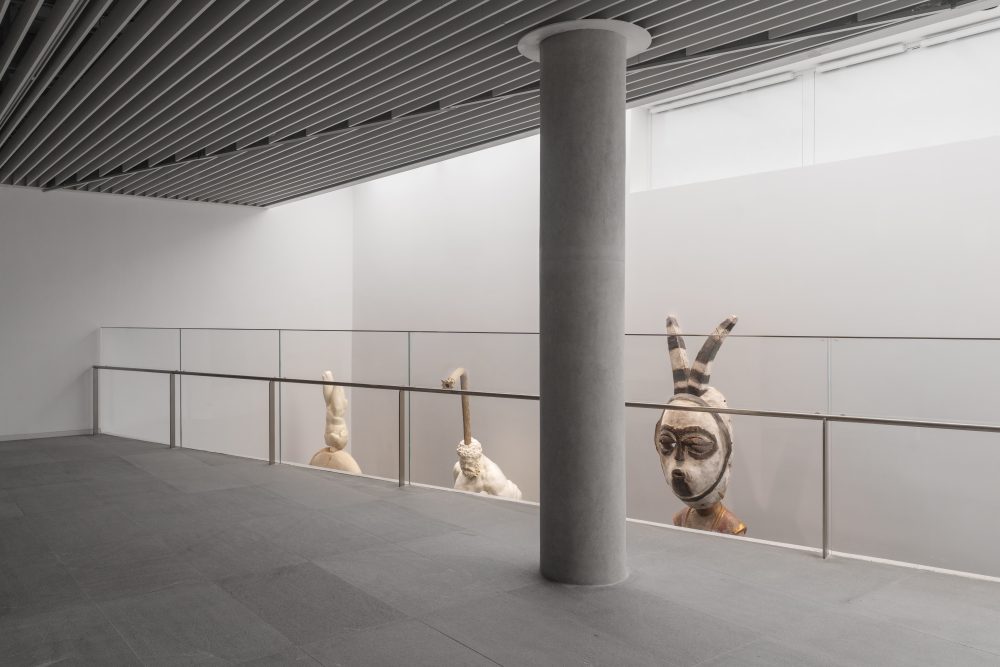
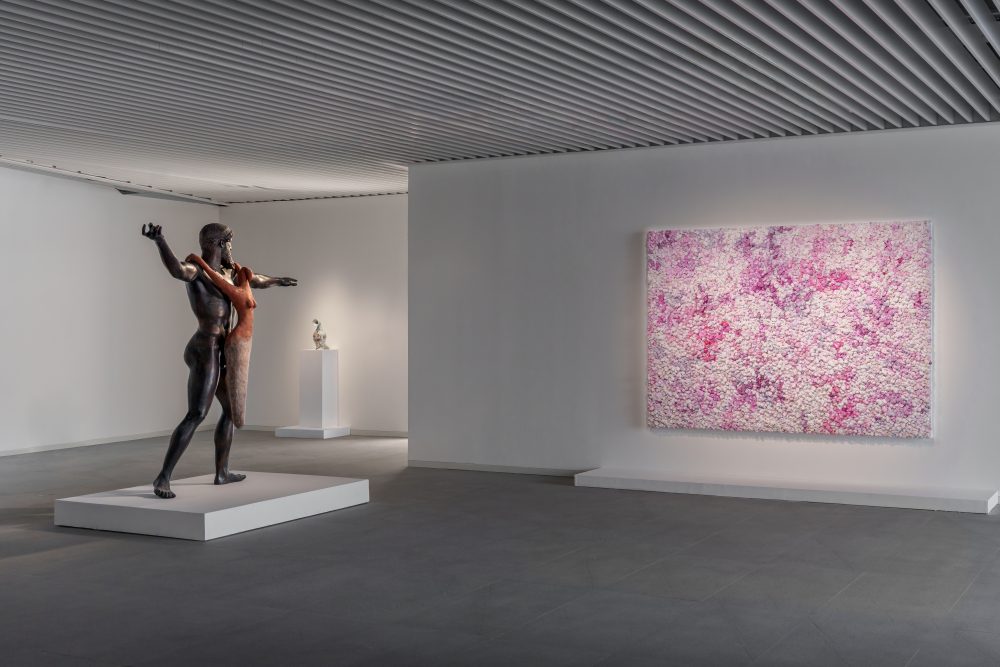
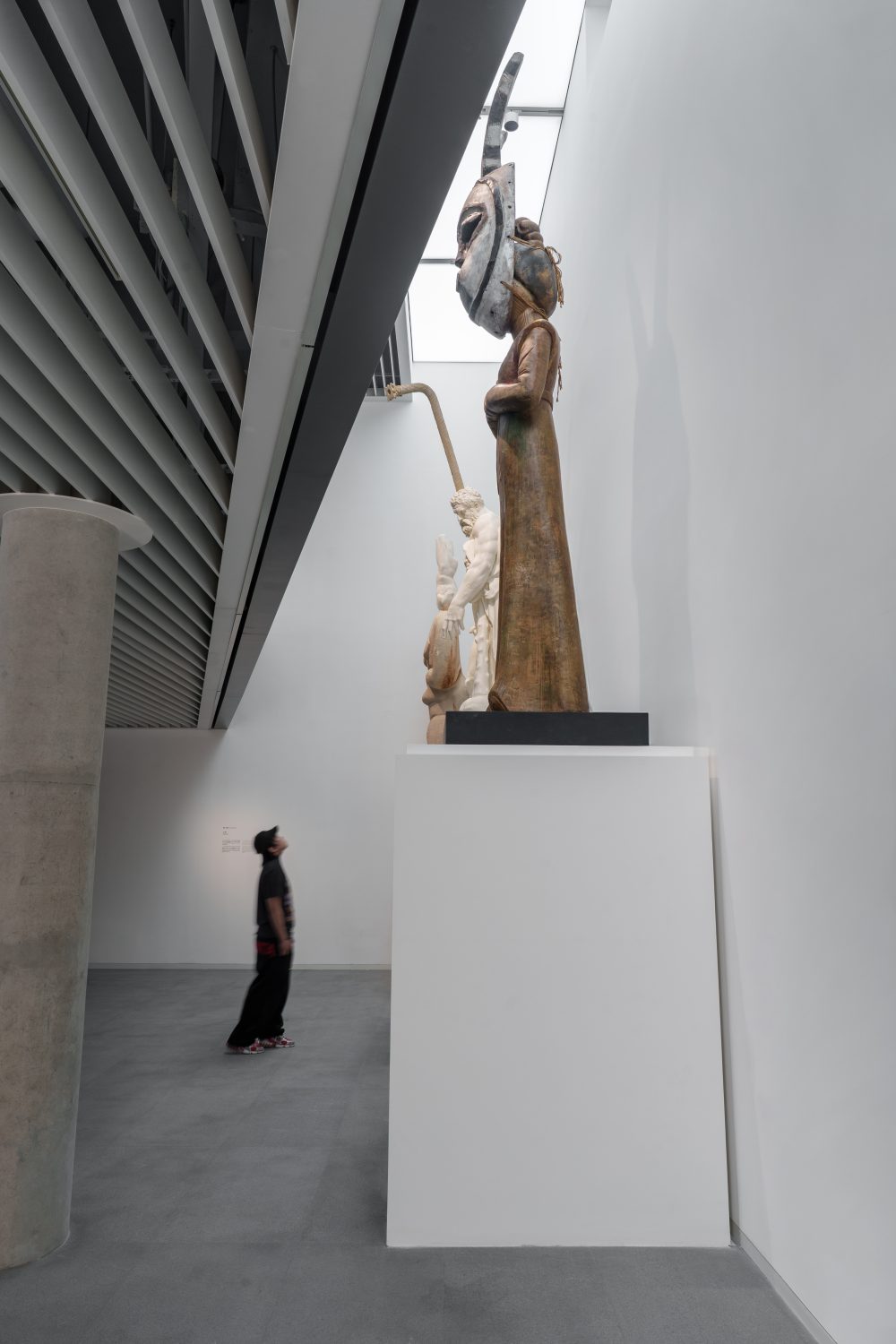
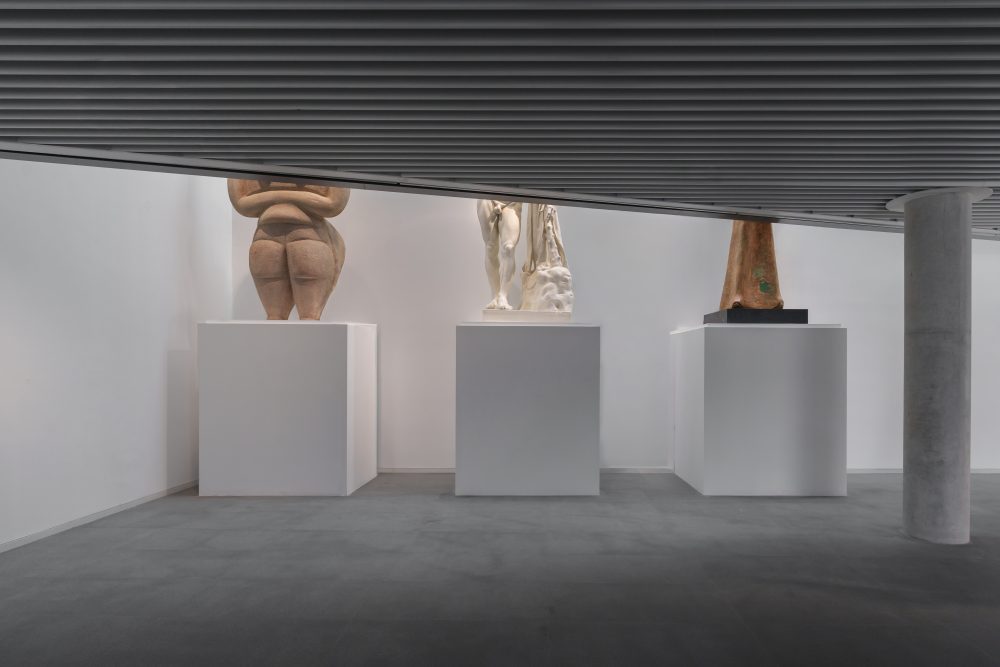
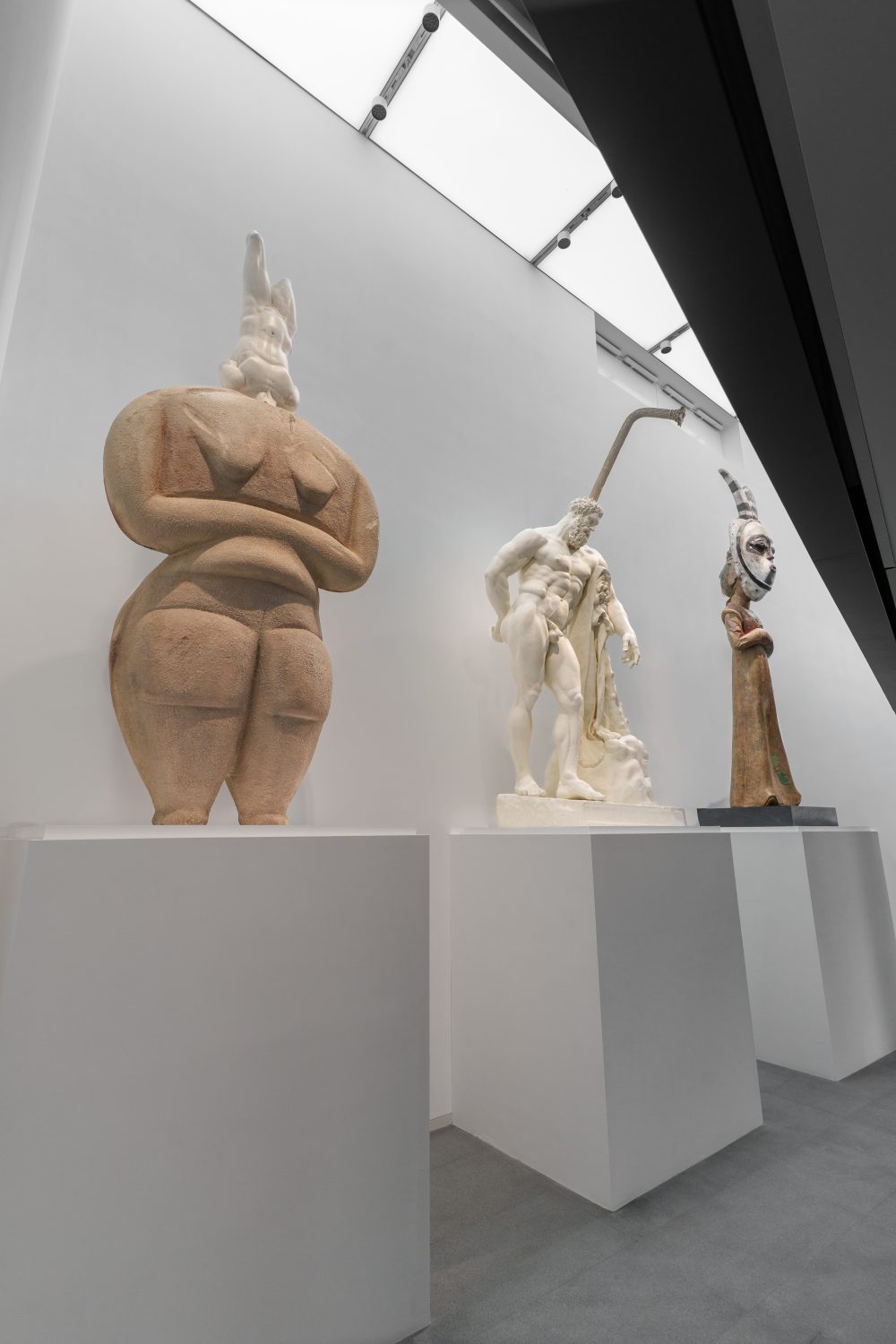
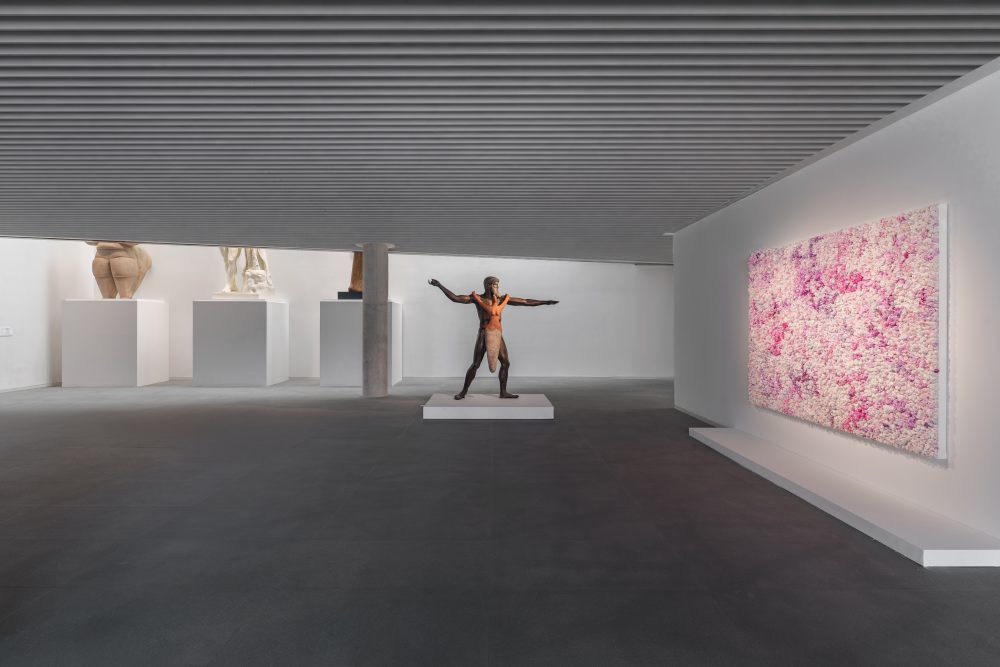
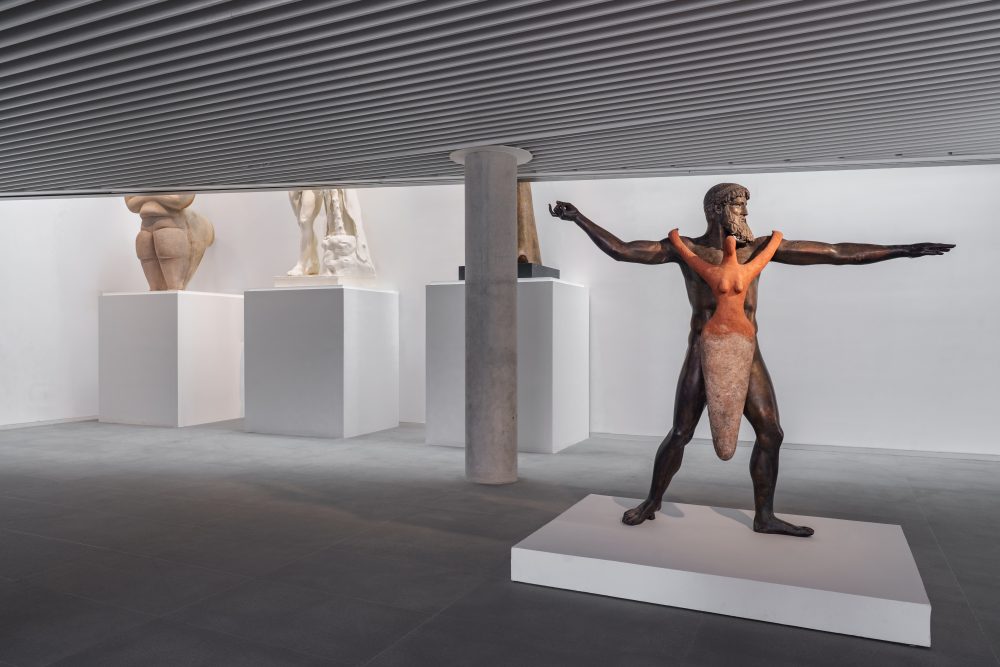
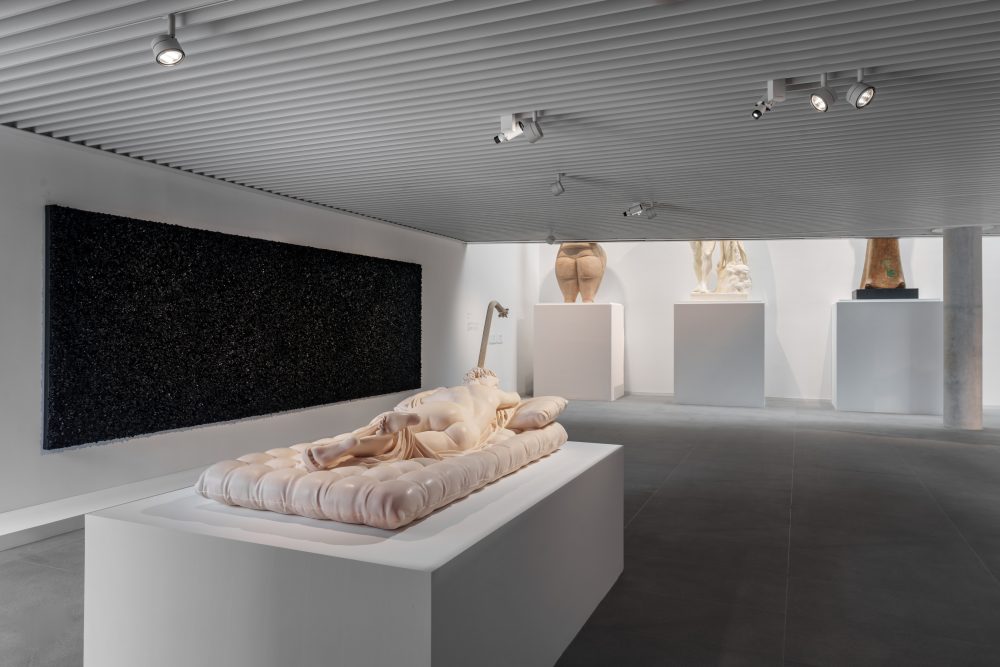
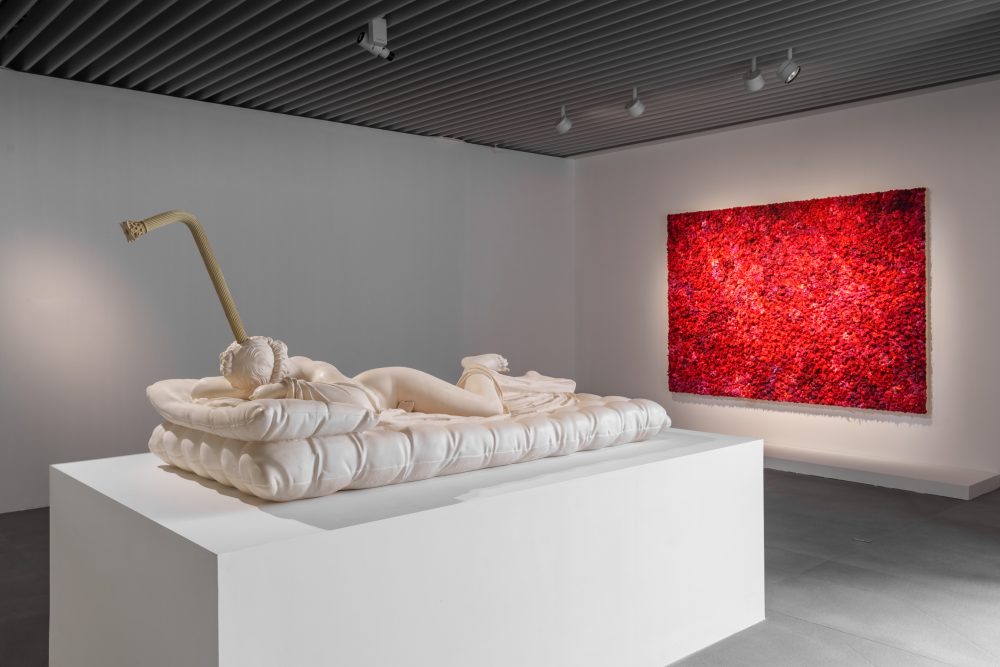
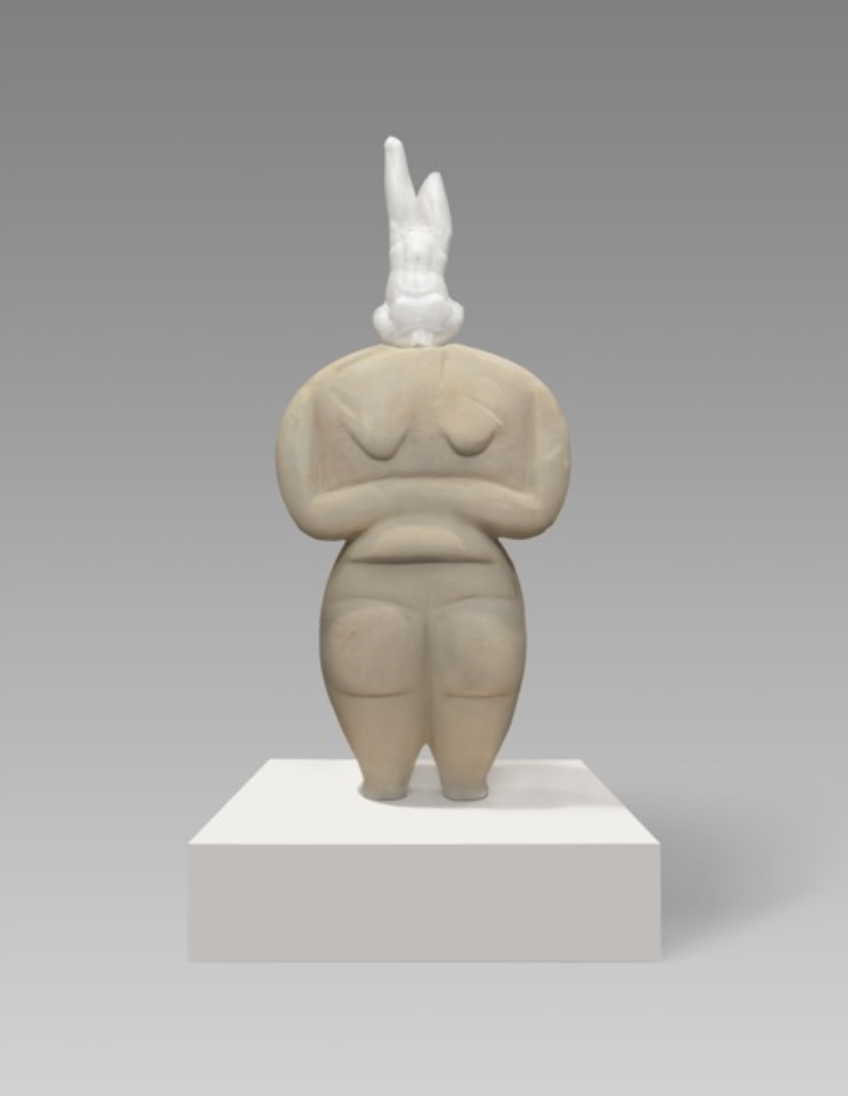
In the “Eternity” and “Evolution” series, Xu Zhen standardises the components of civilisation as if assembling a smartphone, then grafts and splices them together. Greece is no longer the standard — only a fragment swept into the global circulation of images. Like an operating system, he displaces these once-central figures from their stable
positions, while marginalised elements enter the structure with equal force. The question is not how non-Western civilisations might “join” globalisation, but that globalisation was always meant to be rewritten by multiple
civilisations together. In the exhibition’s first unit, “Beverage,” “Eternity,” “Evolution,” and “Under Heaven” collectively declare: the world image has become hybrid, the classical centre has been destabilised, cultural
boundaries have dissolved, and modern consumption has drawn everything onto the same surface. Between classical form,
historical symbol, and contemporary consumption image, no stable boundary has ever existed.
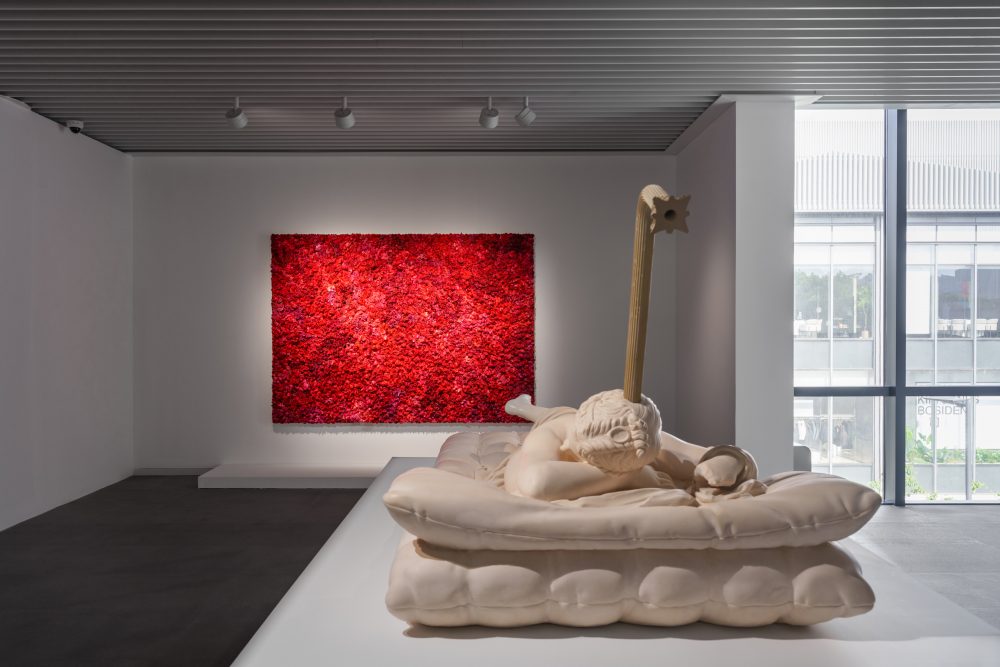
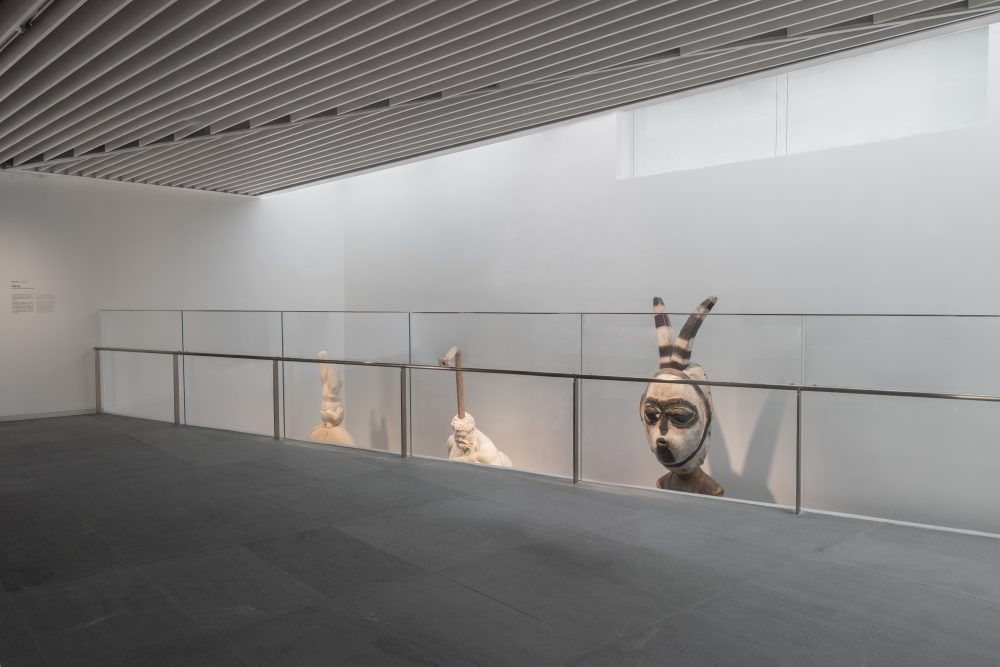
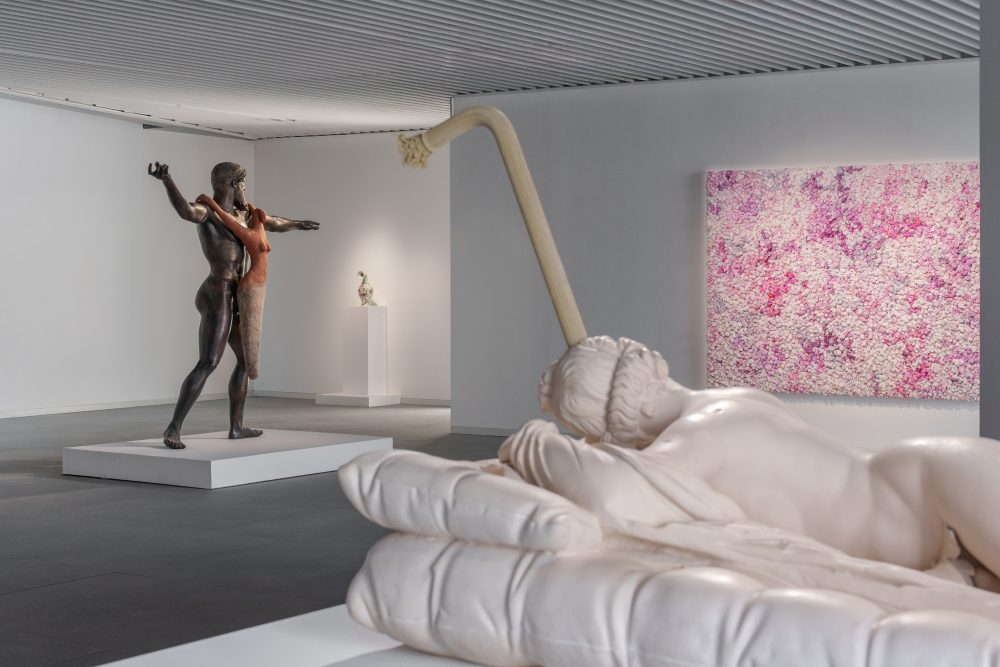
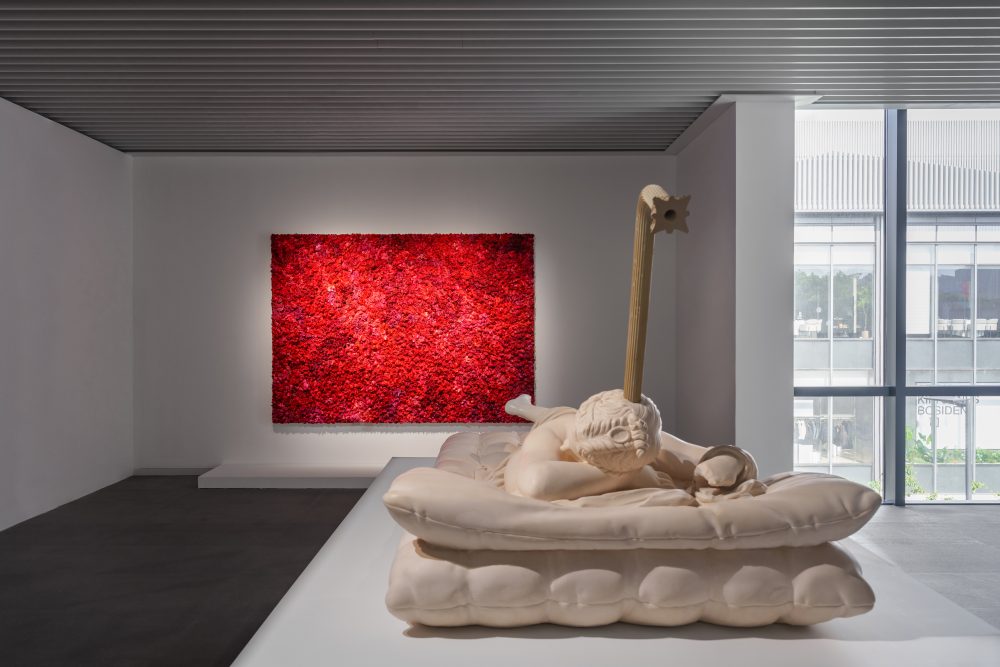
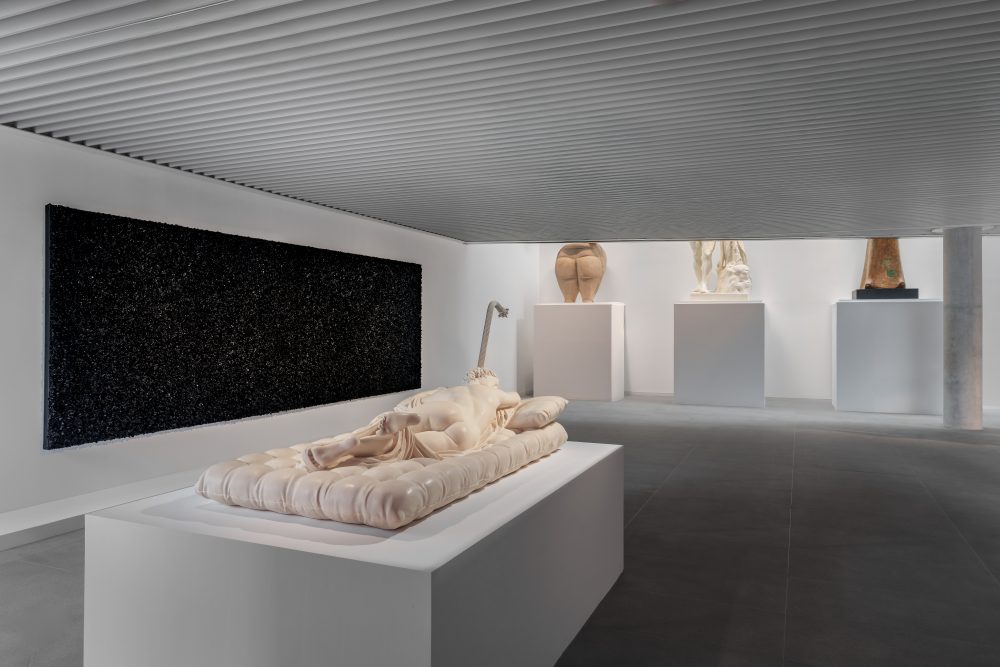
For Xu Zhen, the body is not a closed object, but an existence continuously intertwined with the world. In “Beverage,” “Tool,” and “Details” among others, the classical column is stretched into the form of a straw — and the
artist is perfectly happy, during installation, to insert this tube into his own head. What can we “draw” from history, and what does “Tool” squeeze out? Xu Zhen places his own body and practice at the seams between different
civilisations. In his system, body, imagery, and civilisation no longer exist as entities but as interfaces — all meaning arises in the act of connection.
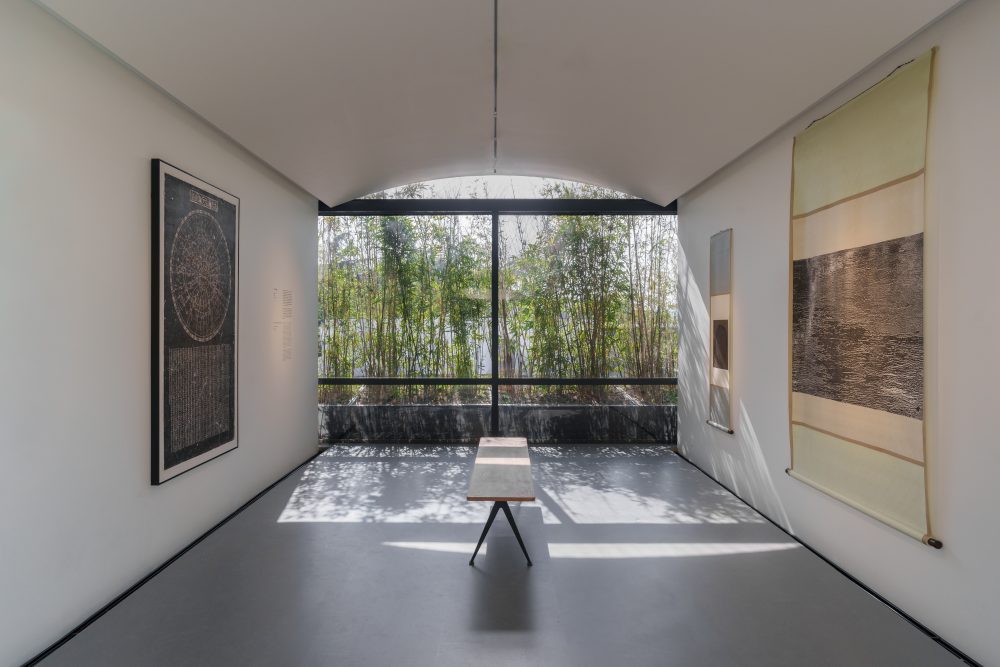
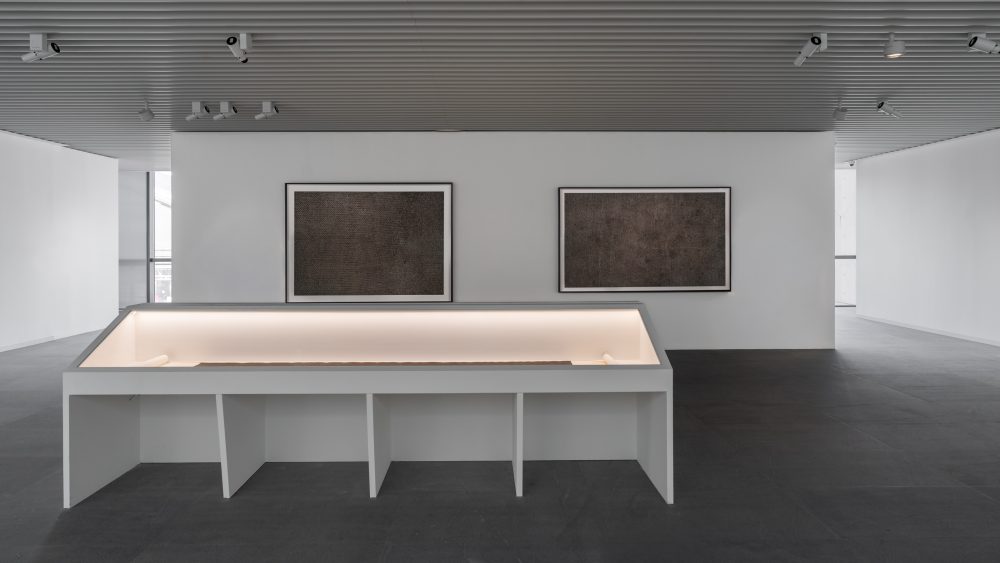
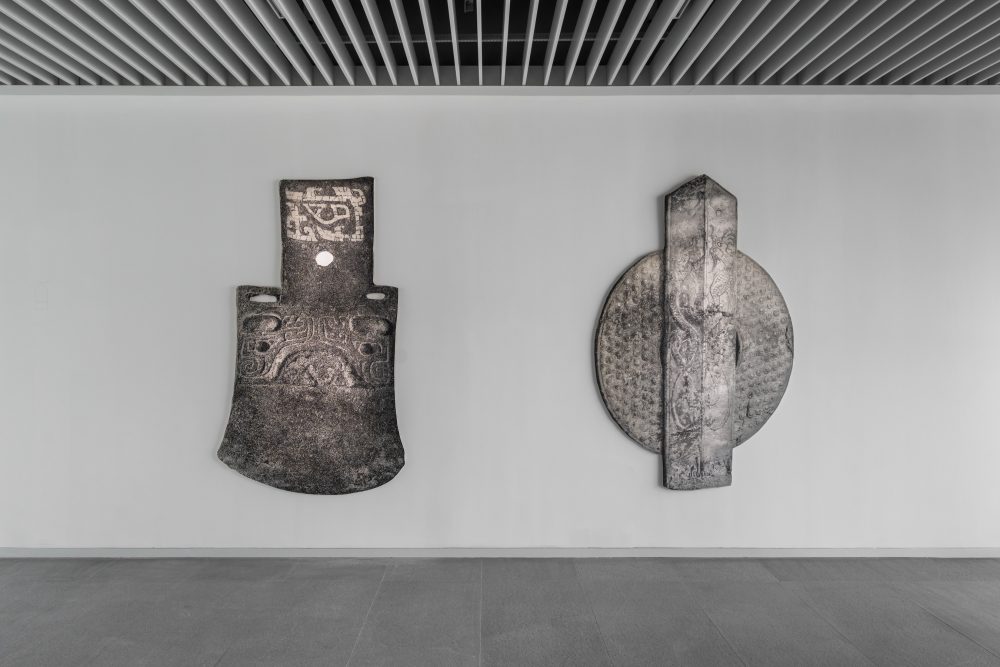
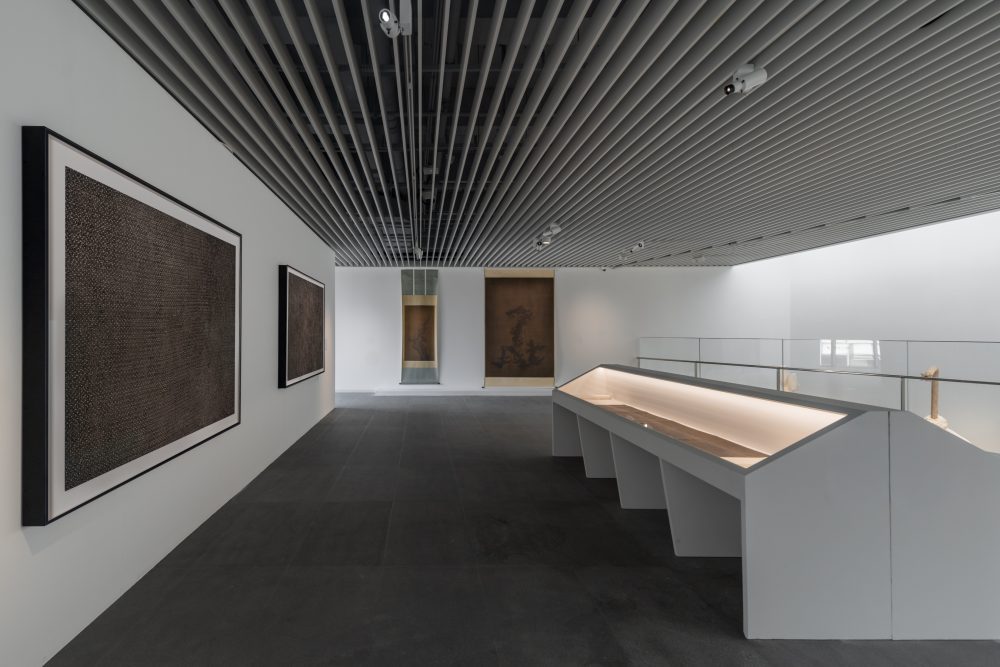
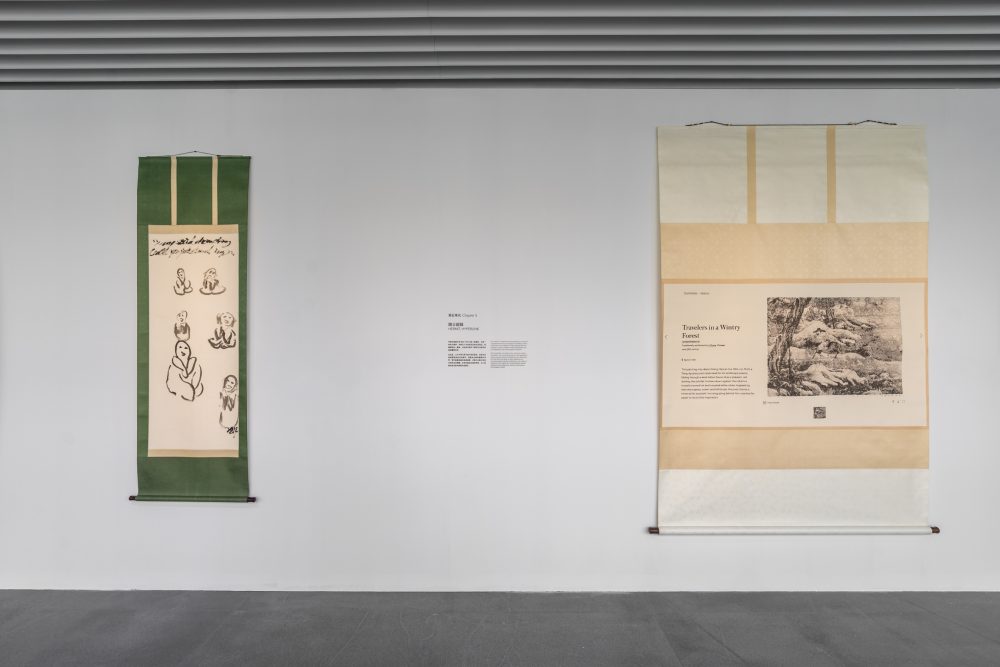
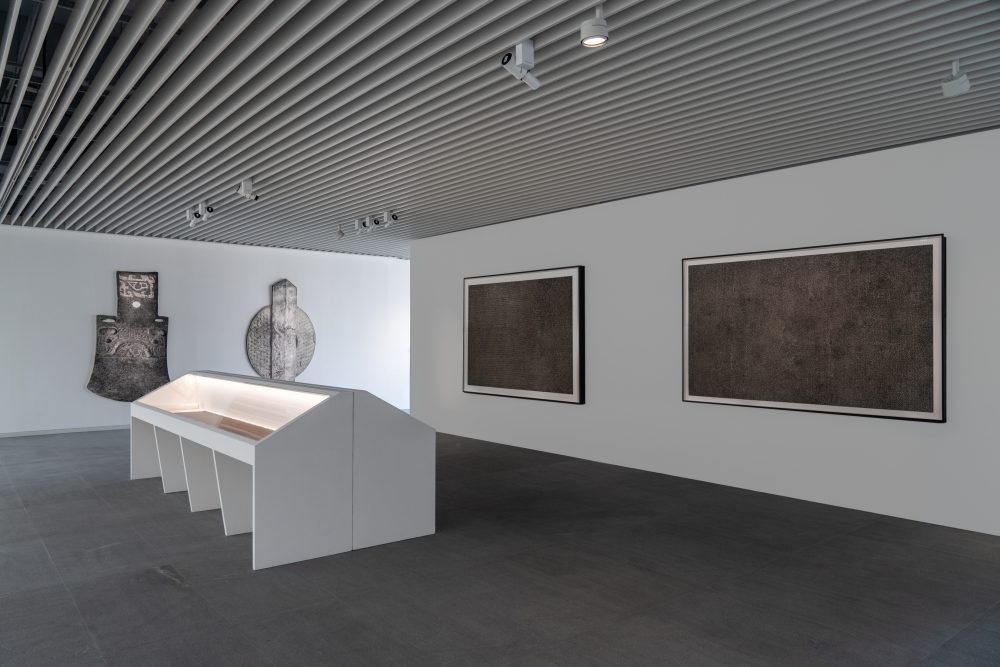
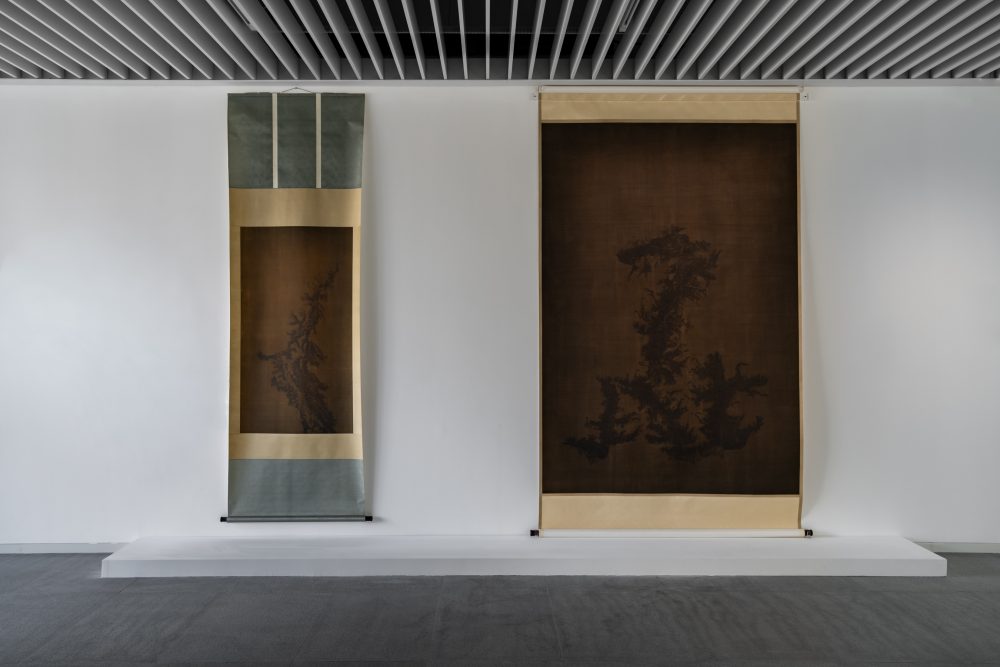
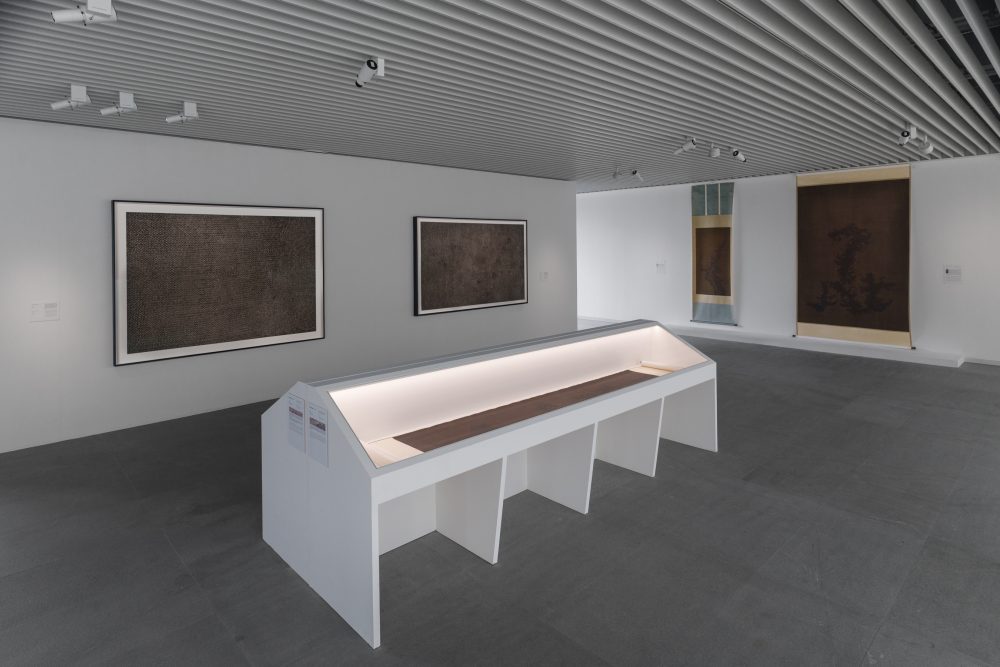
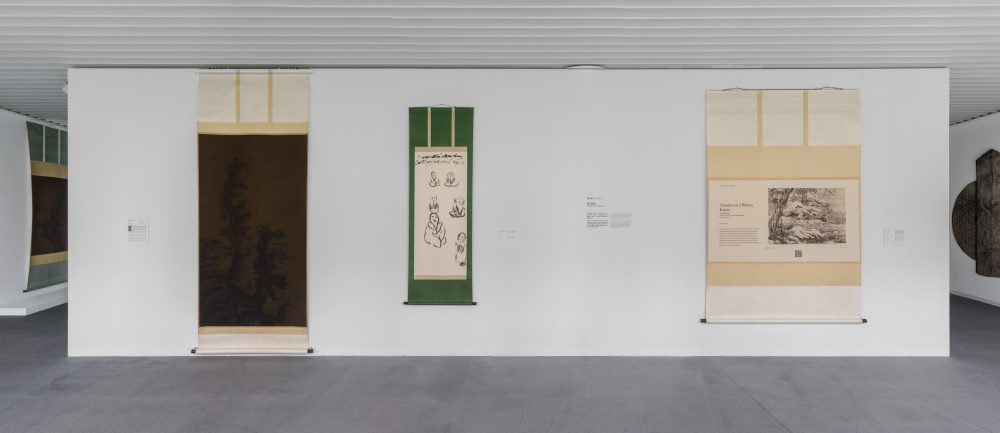
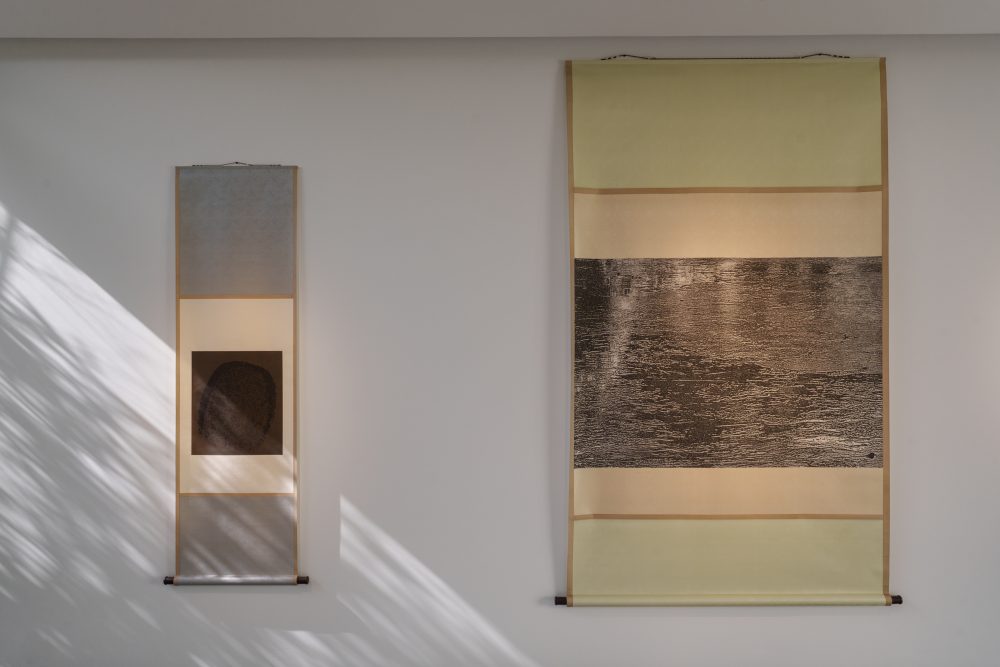
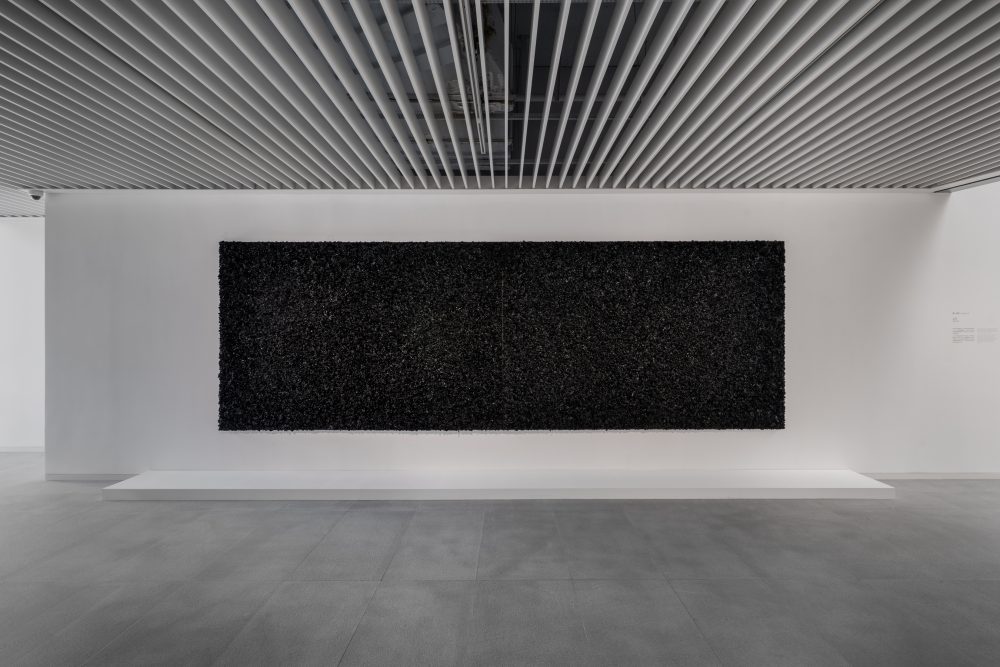
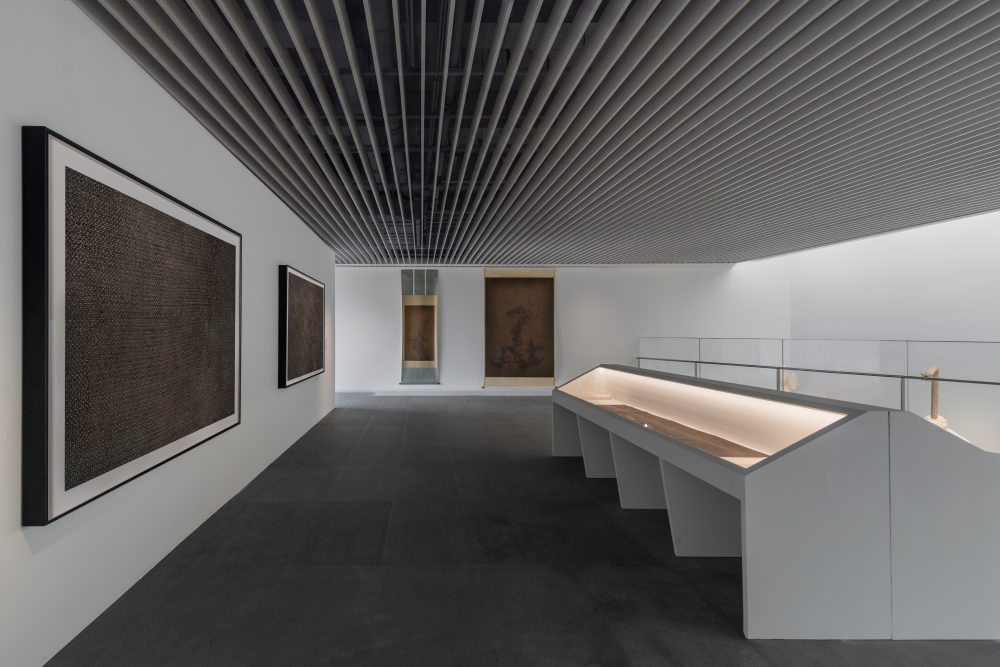
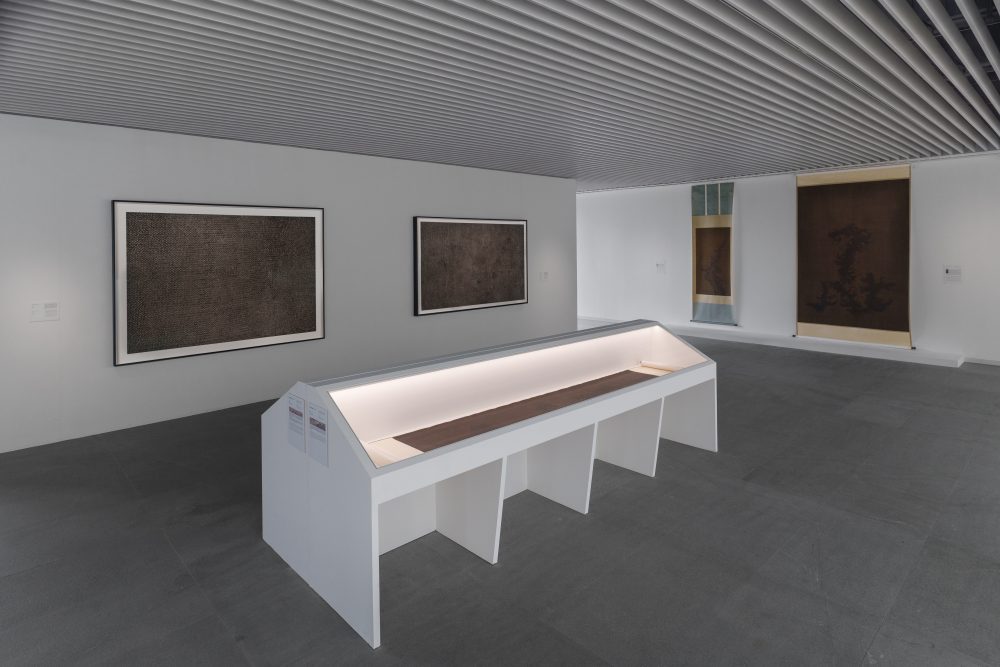
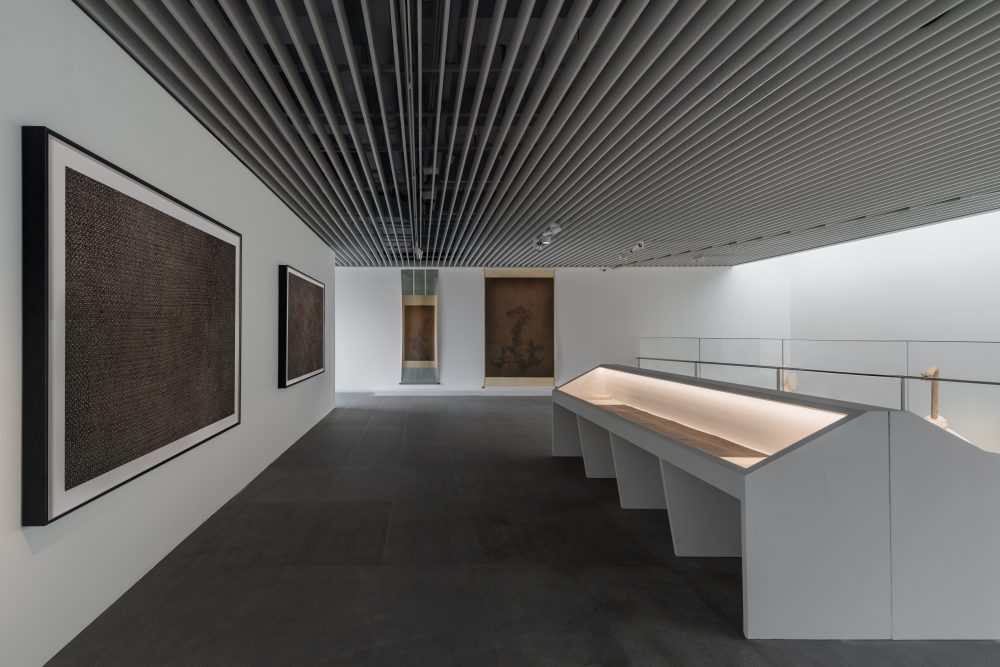
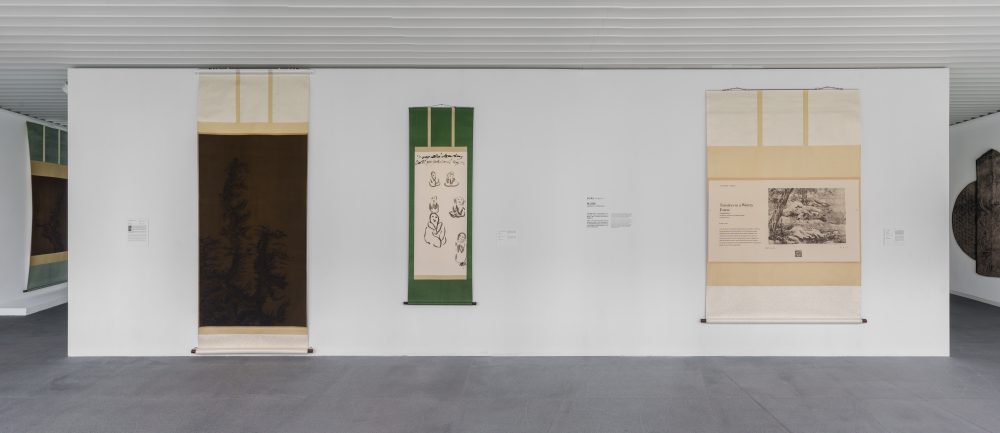
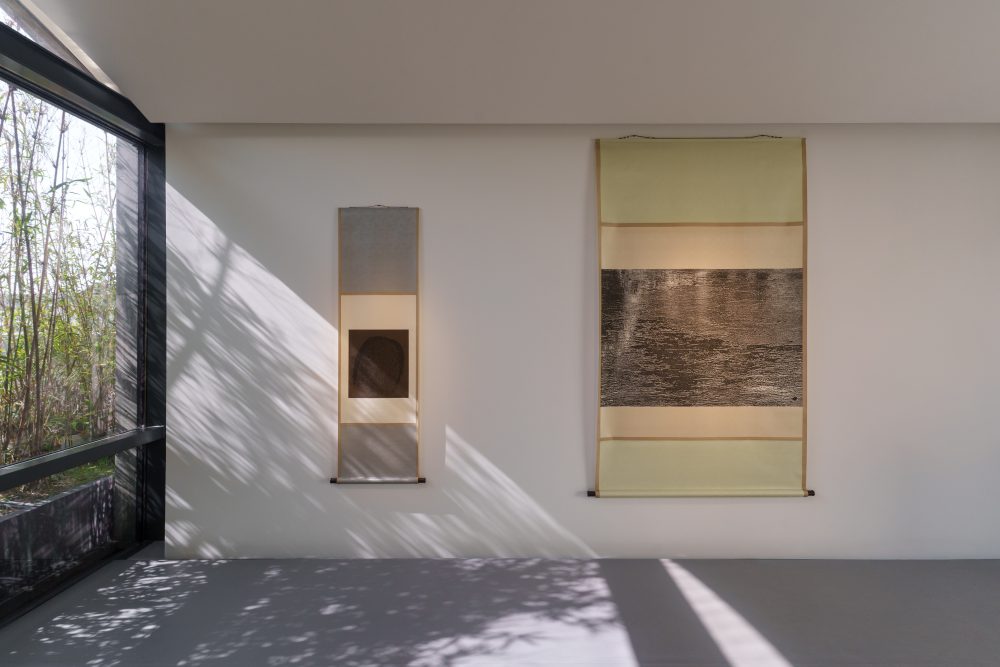
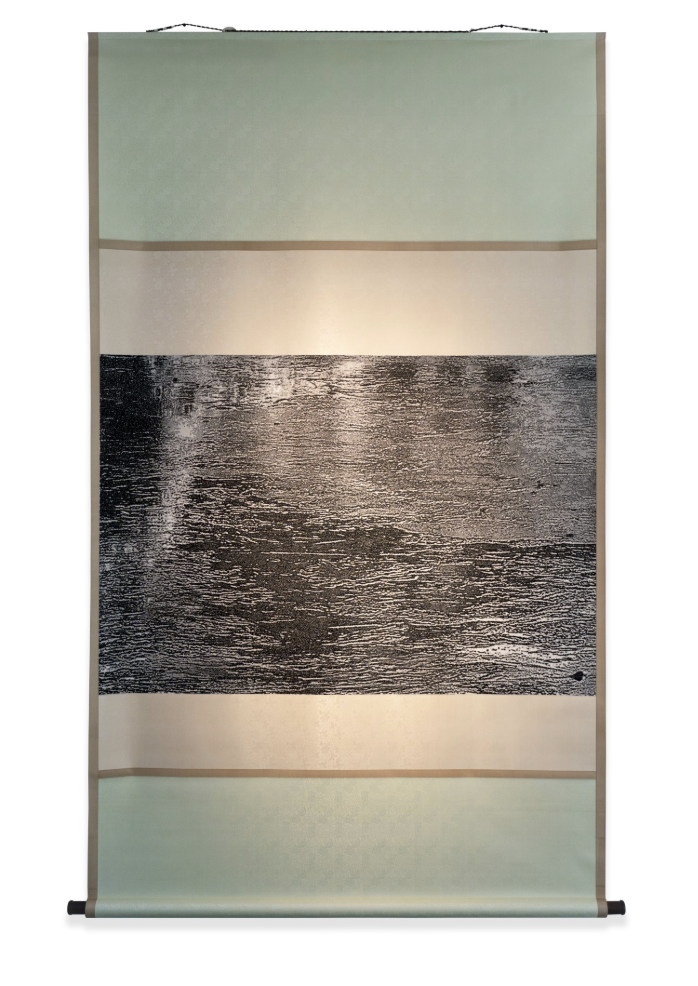
In the exhibition’s final chapter, Xu Zhen does not seek to replace the “West” with the “East,” but to mobilise a mode of understanding distinct from the modern singular world-image. For him, ink painting is not merely a traditional medium but something closer to a still-operative perceptual technology and cosmological inheritance. In
the exhibition, the “Astronomical Chart” — one of the four great stone engravings of Suzhou — is placed alongside his ink works, forming a structure of perception that bridges past and present: the world is no longer understood as
a totality of graspable objects, but as an order that continuously manifests across different
scales and relations. Landscape, qi-resonance, and astronomical schema here are not symbols of cultural identity, but a reminder that the world is not an object — it is a field of relations.
Curator:Sheng Liyu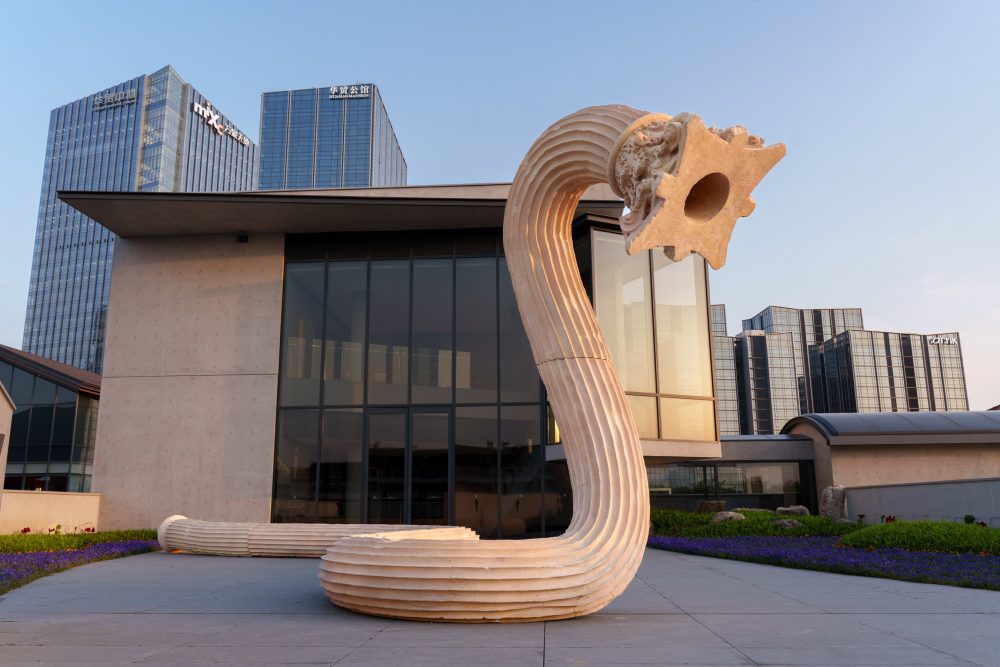


-1000x2408.jpg "The Lofty Recluse on the Waves (Altitude of view: 37.83km)")